Into the Breach + Death Squared + Wizards Unite

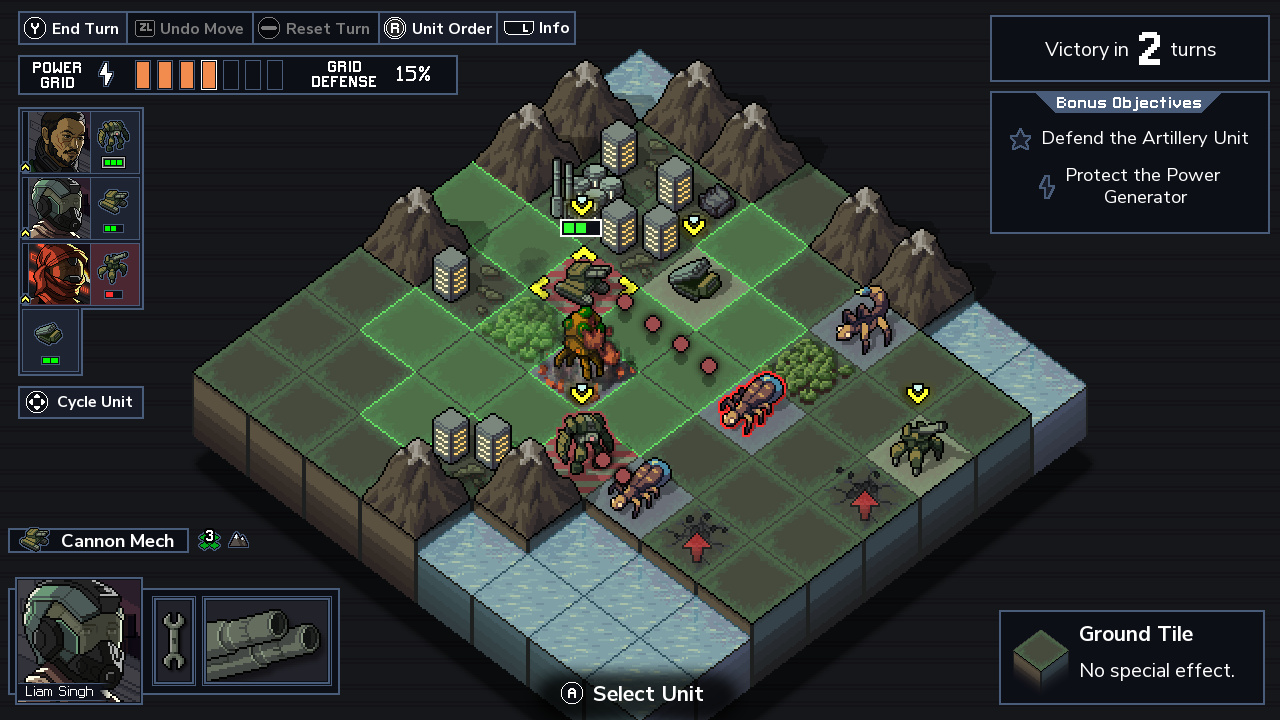
Into the Breach for PC; Image Credit: Subset Games

Into the Breach (2018)

Into the Breach is a roguelike tactical RPG, but if you prefer the jargon-free description try “chess with mechs.” You only get three pieces, but each comes with rules about movement, a handful of weapon options, and a special ability or two. You fight on an 8×8 grid (courting that chess vibe) against giant insects that burst out of the ground, with a rare emphasis on reducing casualties and protecting infrastructure. As you proceed you’ll upgrade your squad and choose whether to push your luck.

Each level is procedurally generated, but as with Subset’s previous game FTL, it often feels like the challenge is handcrafted to be just barely possible. Sometimes I would stare at the screen for ten minutes, certain there had to be a way out of the latest terrible situation. More often than not, there was!

As you get more comfortable with your squad, you can even go after special achievements which unlock new squads, each requiring you to radically adapt your play-style. Into the Breach will appeal to analytical minds that enjoy modern board games, but with an emphasis on creativity that’s often hard to achieve in heavily rule-based systems.

Score: 9 / 10

–Brian

Death Squared (2017)
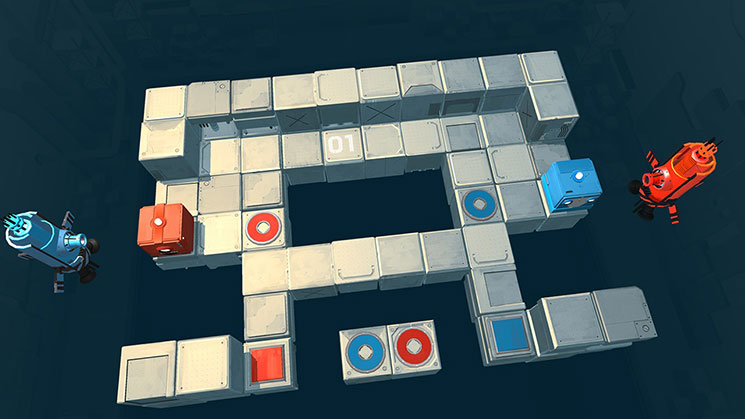
Death Squared for Nintendo Switch; Image Credit: SMG Studio

There are some games that don’t really work as solo experiences, but when played with friends become funny, or bring out that competitive drive, or unite a team with complementary strengths. Death Squared is trying to tap into that, but falls a little short. Your 2 or 4-person squad controls robots in specially designed 3D chambers, where you need to hit switches, avoid traps, and not plummet to your death. The framing device is that these robots are being tested by a mismatched duo: a coldly meticulous no-nonsense AI and a bored slacker. Their banter is lightly comic, and a bit mean.

Kelley and I played together, started strong, but didn’t finish. It wasn’t that the game was too hard; we tended to cruise through the rooms at a brisk pace. The problem was the lack of progression. There’s 120 levels, but after the first dozen you’ve seen every mechanic and the dynamic of the narrators is solidly established. I wish there’d been an actual story or more to figure out, instead of just more to do. Death Squared relies too much on the cooperative dynamic to carry the game, and it should have been more ambitious.

Score: 5 / 10

–Brian

I completely agree – solid puzzles, but not enough variety to keep the game interesting for a sustained period.  I did enjoy the aesthetics and the need for cooperation between players to prevent being burned up by lasers or falling into pits, but the game didn’t build and take itself to the next level in the way that I hoped it would.  If you want a truly great cooperative puzzle platformer, pick up Ibb & Obb instead (the subject of a future review!).

Score: 7 / 10

–Kelley

Wizards Unite (2019)
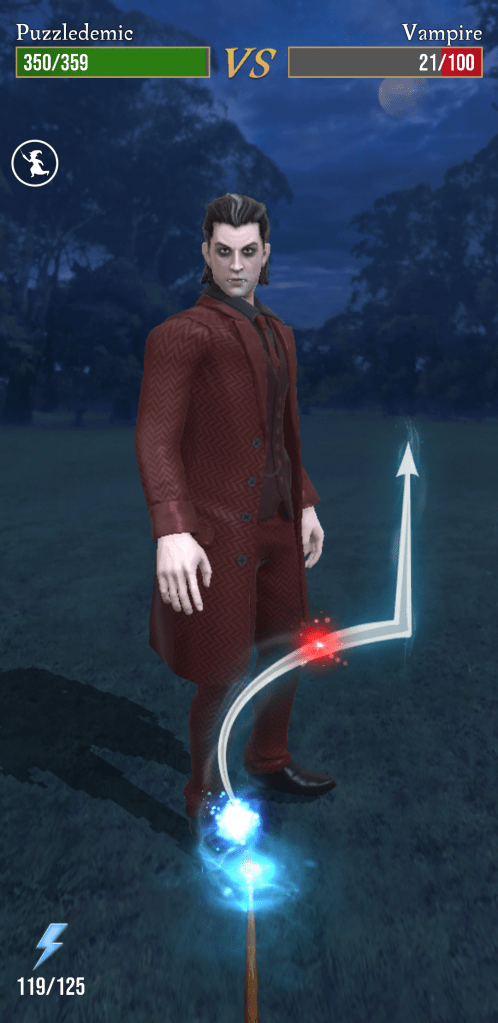
Wizards Unite for Android; Image Credit: Significant Gamers

I unapologetically love Harry Potter, so when I found out there was going to be an HP version of Pokemon Go, I was in.  Fast-forward several years to summer 2019 when Wizards Unite launched.  I was instantly hooked. Much like in Pokemon Go, you wander around and collect things – traces of magical creatures, artifacts, characters, and more – by clicking on icons that pop up and drawing a predetermined shape (“casting a spell”).  Some traces, denoted by colored lights, are less common than others. Traces fall into ten different categories, from “Care of Magical Creatures” to “Mysterious Artefacts,” and each category is split into different themed pages, like “Hagrid’s Hut.”  Using potions can help make traces easier to catch, appear more frequently, or increase the amount of XP received from capturing them.

The three types of buildings found in WU, inns, greenhouses, and fortresses, map back to real-world points-of-interest.  Inns provide energy, which is necessary to cast spells; greenhouses give you potions ingredients; and fortresses let you fight a set of foes in a challenge either alone or with a group of friends.  Also, much like the eggs in Go, WU has portkeys you can unlock by walking 2, 5, or 10 kilometers.

While there is technically a plot to Wizards Unite, I burnt through the story very quickly.  That said, Niantic is good about regularly releasing special events, community days, and limited-time tasks to keep players engaged.  Between these events, the unofficial goal is to fill and level up all of the pages of your Registry. WU may not be thought-provoking, but it is one of the apps I tend to open when I pick up my phone.

Score: 6 / 10

–Kelley

I played Kelley’s copy of Wizards Unite for 5 minutes while walking with her in the park. I zapped several gnomes. I admit to finding the appeal elusive, but I support anything that gets us out of the house.

–Brian

For more in this series see 2019 Trios.
Detroit Become Human + SteamWorld Dig 2 + Another World

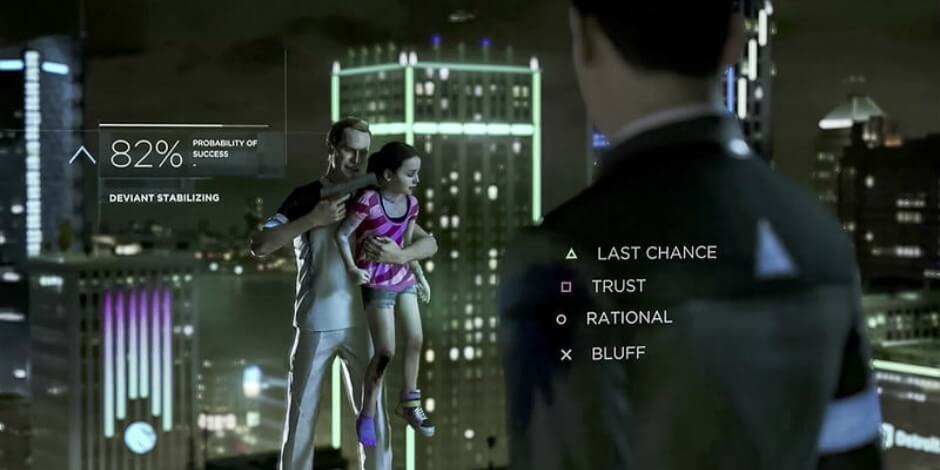
Detroit Become Human for PS4; Image Credit: techantidote.com

Detroit Become Human (2018)

Detroit Become Human follows the paths of three androids: Connor, a hostage negotiator and police investigator; Kara, a housekeeper; and Markus, a caretaker.  As the name suggests, the game is set in Detroit, where tensions are high, androids are property, and some are starting to “deviate” from their original programming.  The three characters all tackle this in a different way. Connor helps the police track down deviants. In the opening scene of the game, Connor is called in to try and save a little girl from her turned android caretaker.  (Thus providing the first of many ways for Connor to die.) Kara goes deviant to protect a child from the man who purchased her. Markus is framed for a crime he didn’t commit and goes in search of the fabled Jericho, where deviant androids live together in peace.

The chapters switch between the characters, with decisions made earlier in the game influencing the choices you have later.  When Kara was cleaning the house, did she find the gun? If yes, in a pivotal scene, will she use it to protect the child she cares for?  Many of these choices must be made with the added stress of a countdown timer and the knowledge that killing an NPC may mean limiting your options for the rest of the game.  At the end of each chapter, you see a flowchart of all of the choices that were available and the percentages of players who made the same decisions you did. As a data nerd, this was fascinating!  You also have the opportunity to go back and replay the chapter to unlock decision points you missed. This is a convenient way to un-kill NPCs and Connor. (Oh, Connor.)

The cinematic nature of the game, the strong writing, the weaving together of narratives, and the big reveals all worked for me.  Were there times I sighed at the predictable path some characters take or the heavy-handed messaging, yes, but I enjoyed every moment.

Score: 9 / 10

–Kelley

Detroit Become Human gets a lot of things right. The pacing has you changing characters and settings frequently, with segments centered on character building, world building, action, philosophizing, investigation, and horror. The player makes meaningful choices and feels in control. Character motivations and the links between decision and consequence ring true. The character models and motion capture performances are strong enough for us to finally crawl out of the uncanny valley, and even develop emotional bonds and digital crushes.

French developer David Cage and his company Quantic Dream have been chasing the grail of interactive movies since Omikron: The Nomad Soul in 1999. 2010’s Heavy Rain demonstrated how much potential was in the Cage formula: criminal investigations with branching stories tied to quick-time events. It was also one of the first games I played surrounded by friends with everyone getting invested and shouting advice. Kelley and I did a series of group events for Detroit Become Human and I absolutely recommend it if you are into social gaming.

Little things I liked: scrappy Detroit getting some love, uncomfortable surveys between gaming sessions, good UI on the branching flowchart.

Score: 8 / 10

–Brian

SteamWorld Dig 2 (2017)

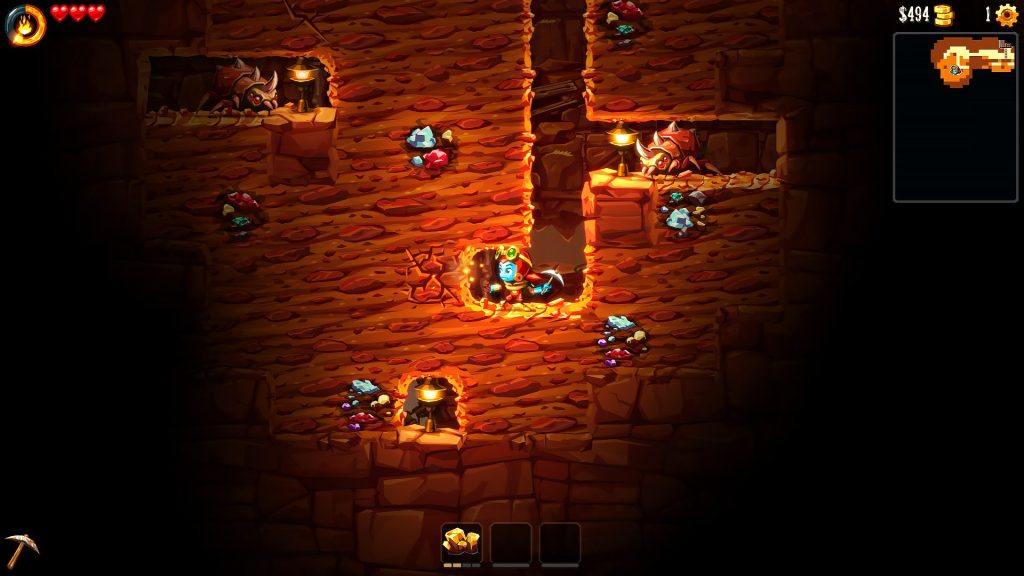
SteamWorld Dig 2 for Nintendo Switch; Image Credit: Image & Form Games

In SteamWorld Dig 2, you play Dorothy – a robot trying to find her missing friend (and protagonist of the first SteamWorld Dig game) Rusty.  She has heard rumors that Rusty was spotted in the town of El Machino and goes to investigate.  When she arrives, El Machino is being ravaged by a series of earthquakes. Dorothy wants to go into the mine under the town to look for Rusty, but the mayor only agrees if she searches for the source of the earthquakes at the same time.  

Simply put, SteamWorld Dig 2 is a mining exploration platformer.  Dorothy starts with basic equipment and mines ores to sell at the shop in El Machino.  From there, she can upgrade (level limiting) to get stronger tools and abilities, which allow different types of ore and rock to be mined.  Dorothy does need to return to the surface after a time to allow her solar lantern to charge. Though this can be frustrating, it makes the player think about digging in such a way that Dorothy can get out – leaving platforms of a height she can jump, remembering the path back to the nearest pneumatic tube (fast-travel), and not accidentally mining in places that are detrimental to the infrastructure she already created.

One of the things I liked most about SteamWorld Dig 2 is that there are two ways that you can play – with or without guidance directing you towards the next goal.  I chose to play without guidance and found it a very enjoyable experience that foregrounds exploration. I firmly believe this play-choice let me find more hidden areas, puzzles, and collectibles. Though the story seemed secondary to the delight of mining, I thought SteamWorld Dig 2 was an extremely pleasant and low-stress game.  I found the steampunk-meets-desert style appealing and loved the exploration of the mine.

Score: 7 / 10

–Kelley

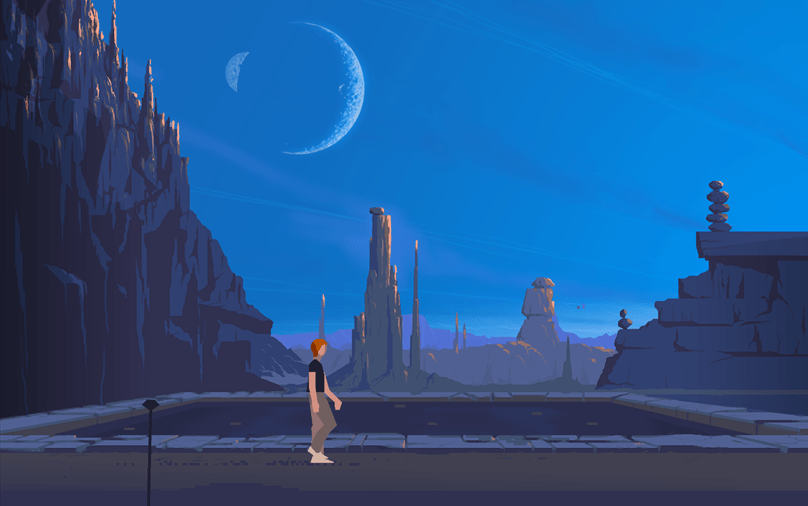
Another World (1991)

Another World for Android; Image Credit: Éric Chahi

One of the earliest definitions for what a video game could be was “interactive movie.” This led to a design style of cinematic games whose influence is still felt today (see The Last of Us or any Metal Gear Solid title). There’s a strong case that the origin of this approach is Another World, a 1991 adventure platformer released for the Amiga. You play a physicist accidentally teleported to an alien world where you must survive and escape. The non-verbal storytelling, early example of an NPC sidekick, vivid vector-based backdrops, smooth rotoscoped animation, and brief but effective cutscenes were groundbreaking in their day. 

Unfortunately, that day was almost three decades ago, and Another World is virtually unplayable now. On one hand, the puzzles in Another World or well integrated with the adventure compared to the random gates locked with spatial-logic riddles found elsewhere in the genre. But on the other hand, “solving” the puzzles typically involves repetitive trial and error sessions where the slightest misstep means death. Things get even worse in the game’s action-heavy second half, where moving forward requires memorizing exact sequences of shooting and shielding. I must admit I gave up well before the finale. Another World gave us many innovations, but its weak spot is gameplay, consigning it to the status of historical footnote.

–Brian

Score: 2.5 / 10

For more in this series see 2019 Trios.
Snipperclips + Spider-Man + Mu Cartographer

Snipperclips (2017)

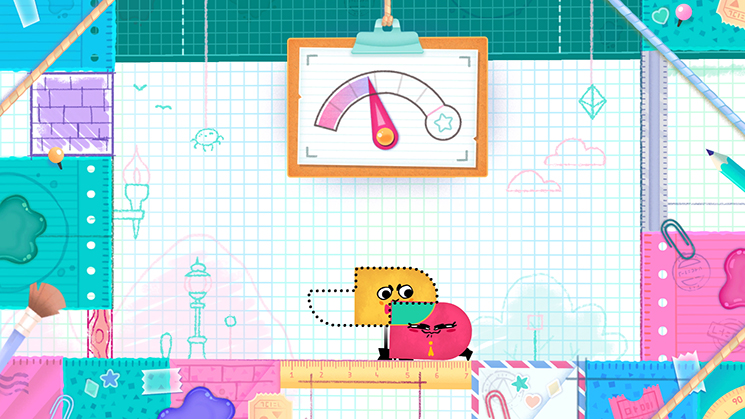
 Snipperclips for the Nintendo Switch; Image credit: SFB Games

Snipperclips is so cute and kid-friendly that it risks getting dismissed before you’ve fully peeled back its many layers. You and a friend are little more than stick figures with googly-eyes, except that your rotatable bodies are mission-critical shapes: rounded on one end and sharp-corned at the other. You can overlap your body with the other player (or sometimes other objects) and “clip” the overlapping area away. Snipperclips exercises this mechanic in a variety of ways: usually requiring you to create and then pose in specific forms or accomplish a small goal by turning your body into a tool like a wedge, point, wall, or bowl to pry, pop, block, or carry. 

Originally a bit too light-weight, extended content has made this into more than a single-sitting morsel without sacrificing the highly-manageable, single-screen, one-task-at-a-time simplicity that is part of the charm. Snipperclips is the perfect puzzle-game for a co-op “first date” before committing to a longer or harder experience.

Score: 7 / 10

–Brian

Snipperclips was a co-op game we played early in 2019.  Brian had previously been introduced to the concept of rotating and snipping away at the bodies (and souls?) of two adorable half-pill-shaped characters, but it was a new and novel thing for me.  

Anyone who has talked to me about video games knows that aesthetics and cuteness-factor can help elevate a game from blah to yay.  Snipperclips benefited from that bump.  The puzzles were relatively simple, but the need to work together to cut just that corner off required a surprising amount of communication and caused quite a lot of laughter when one of us accidentally snipped the other in half.  The puzzles built in difficulty over the course of the game, but completing them was never a great task. In all, Snipperclips was a pleasant romp filled with hidden truths about what happens when scissors go rogue.

Score: 8 / 10

–Kelley

Spider-Man (2018)

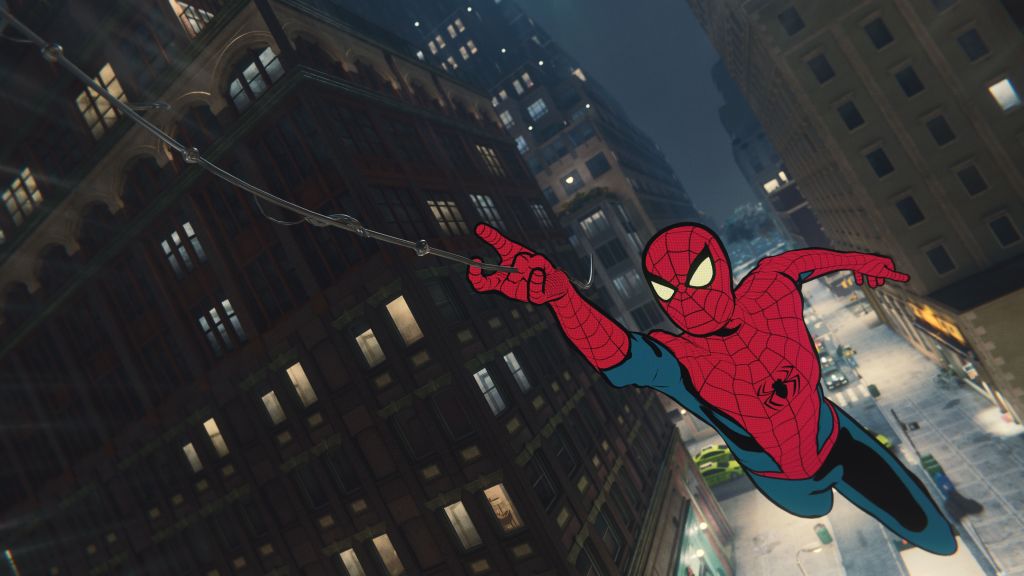
Spider-Man for the PS4; Image credit: Unilad

I have a theory that digital gaming is the medium where superheroes actually belong. The films are mostly terrible; a rant for another day. Yet while I have trouble getting excited about actor-costume composites battling waves of CG on the silver screen, if I get to control the superhero, I suddenly get the appeal. Consider, too, how many superhero cliches are just poor translations of triple-A game conventions: stories hinge on simplified power fantasies, heroes are never allowed to die, abilities and mechanics get the spotlight, conflicts are resolved by violence, and conclusions are always boss battles. Spider-Man was already one of the least tedious franchises, eschewing grimdark pomposity for character, charm, and one-liners – all of which have been preserved in the game. 

As every reviewer will tell you, they’ve nailed the spider-slinging-and-swinging mechanic. It’s immediately bracing and empowering. Getting between hotspots in open-world Manhattan is a pleasure in its own right, which is great because you’ll be swinging into action not just to advance the much-better-than-it-had-to-be plot, but to stamp out the semi-random real time crimes springing up every few blocks (Manhattan, amirite?). 

Combat follows the Batman Arkham model of rhythmic button mashing. Every free-style riff is rendered into punches, kicks, and web shots. You’re crazy powerful (duh), but you get overwhelmed by numbers plus bazookas are involved, so thinning out grunts requires occasional dips into your arguably-excessive arsenal of gadgets and special suit abilities. This is an open world game so there are backpacks to collect, photos to take, optional side-quests, and sundry mini-games. You play Mary-Jane Watson and Miles Morales in stealth sequences. These are a bit tamped down compared to Spidey, but help invest you in the game’s character-driven approach. And of course there are epic boss battles. These really takeoff in showdowns against supervillain pairs, where the presence of two distinct, asynchronous move sets generates emergent gameplay and requires on-the-fly tactics. 

Score: 9 / 10

–Brian

Brian and I have different opinions on the place superheroes should occupy in media, but we do agree that videogames are one of the best.  Spider-Man lets the player step into the shoes of Peter Parker – photographer, lab tech, diligent nephew, gadget creator, and web-slinging superhero – and it does so with a good story.  Does the game benefit from not needing to spend a lot of time on a rather universally-known backstory? Absolutely. It takes all of that for granted and starts with Peter getting an eviction notice for unpaid rent.  Immediately your heart goes out for the guy who is following his low-paying dream career, stopping crime all over Manhattan, and, in his spare time, helping out at Aunt May’s nonprofit F.E.A.S.T (Food Emergency and Shelter Training).  Throughout the game, you come to know the characters of Doctor Octavius, Harry Osborn, Mary-Jane Watson, Miles Morales, and Aunt May. You celebrate their successes and feel for them in moments of pain.  

One of my favorite things about video games is the exploration.  When Spider-Man gave me the chance to find hidden backpacks and take photos all over the city, I was in!  I actually had to be reminded on several occasions that it might be a good idea to save some of the fun exploration stuff for when I needed a combat break in the game.  (I largely ignored this advice.) Where I loved the exploration aspect, I hated the web-swinging.  I never could quite get the hang of it, which made some forced web-swinging sections difficult.

I found combat enjoyable, though not particularly sophisticated.  This is probably largely due to my playing style. While Brian played a gadget-heavy game where he was constantly switching between tech, I tend to not open up menus during combat/stealth sequences because I find it breaks my flow and concentration.  This meant that I really just went in with one gadget equipped and hoped that my strategy of hiding to pick off the bad guys one-by-one would be enough. That usually worked. For me, the humor and character-driven story more than made up for any other issues I had with Spider-Man.

Score: 8 / 10

–Kelley

Mu Cartographer (2016)

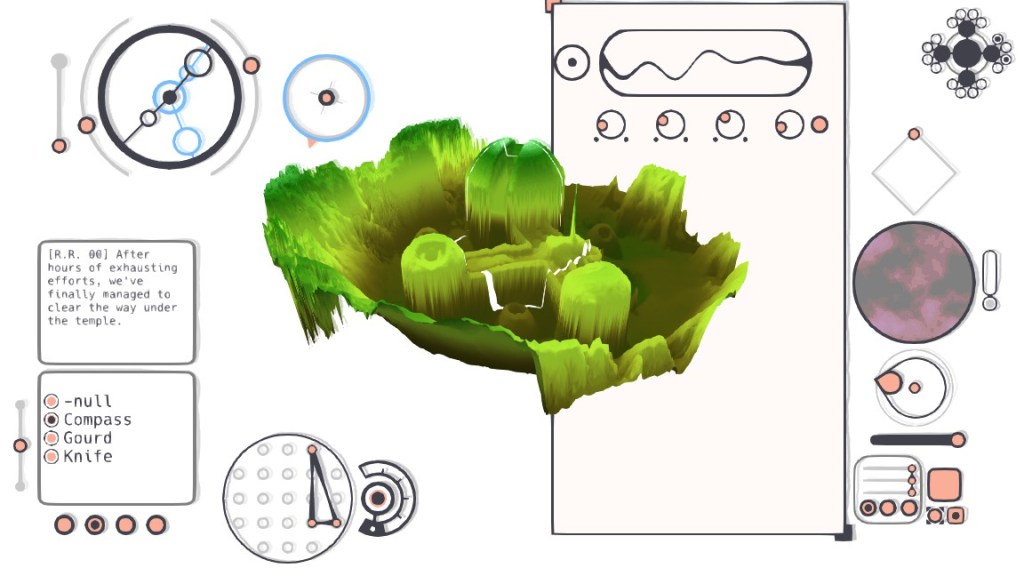
Mu Cartographer for the PC; Image credit: “7 4 17 0 17 _twelvetwenty-one”

Give Mu Cartographer credit for creativity. I’m not even sure what genre it falls under and that’s generally a good sign. Essentially, it’s a colorful cross between a topographical map in a petri dish and a three dimensional audio wave visualization. Around the edges of the screen are a bunch of exotic buttons and dials. In case you weren’t aware that you were in a mid-2010s indie game, there is no tutorial and the expectation is that you will enjoy the process of learning what each gadget does, how they all interact, and the criteria for progress. Once you get your sea legs, most of the game involves tuning a sort of alien ham radio to search for anomalies quite literally lost in the otherworldly noise. 

Mu Cartographer is actually rather relaxing. Waves of smooth synth and psychedelic shades wash over you as the tale of a vanished expedition takes shape. If you’re the type of person who likes fiddling with odd curios long after the indifferent masses lose patience, you might give this a try. It won’t break your bank, but it isn’t likely to blow your mind.

Score: 4.5 / 10

–Brian

For more in this series see 2019 Trios.
Introduction

Hello and welcome to Significant Gamers! 

This is a blog where we, Brian and Kelley, weigh in on video games. We’re always searching for recommendations on games that can be enjoyed by duos, whether co-op, competitive, or trading the controller back and forth. We also host an informal group gaming series (GNIFty) where we turn single-player games into collective experiences, but again, there’s very few internet resources for similar events. So after giving it some thought, we decided this was a niche we could fill.

To start things off, Kelley and I are reviewing the games we played in 2019 that were at least an hour long. Note that many of these will be older games. Over a dozen are titles we played together. Several were group plays. Others, we tackled solo.

The plan for now is short-ish reviews in batches of 3. We hope you enjoy!

Design a site like this with WordPress.com
Get started