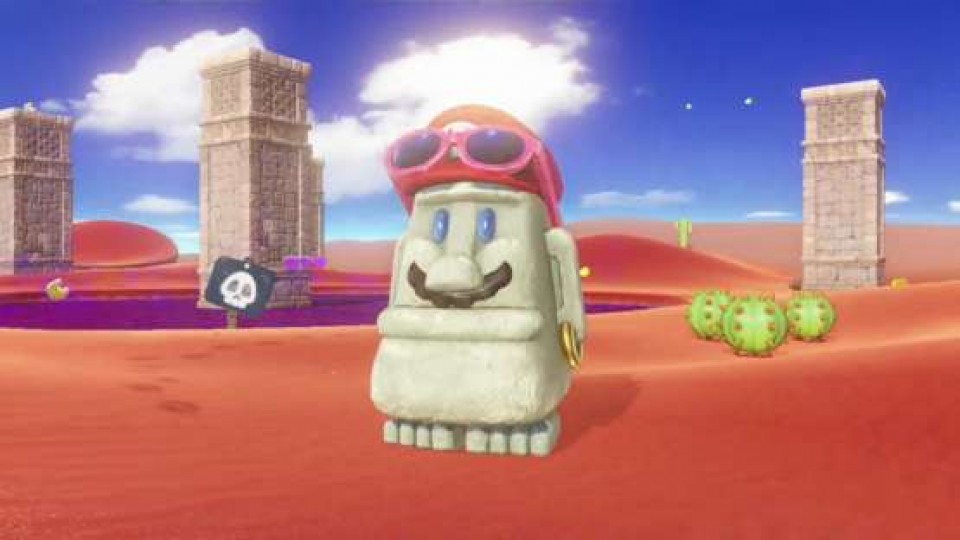
Super Mario Odyssey for the Nintendo Switch; Image Credit: playcalendar.com
Super Mario Odyssey (2017)
Finally Mario’s hat gets its own game. (The Justice for Waluigi people have something new to cry about.) Mario is there too, because the hat needs somebody to throw it. The player takes command of a mario-version of whatever the hat lands on (Bullet Bill, electric wires, a fish), providing a huge array of alternative control schemes and special abilities beyond Mario’s already impressive moveset. Switching between Mario variants is key to collecting moons and thus unlocking new areas. There are hundreds of moons indiscriminately doled out at the end of every platforming challenge, secret area, and boss battle, so players are free to bypass frustrating bits or game modes that aren’t their cup of tea.
Super Mario Odyssey is probably the best 3D platformer since… Super Mario Galaxy 2. This is a field the Mario people have pretty much locked down. Odyssey does a good job innovating with the hat transformations (or at least borrowing from the underrated Warioland series), while also paying homage to its roots via pipes into 2D sequences. However there are some traditions I wish the franchise would transcend: the perennial pantomime that passes for story, Peach’s role as a passive victim, the emphasis on collecting for the sake of collecting. Odyssey’s gameplay remains as fresh as ever, but the framing premise has grown stale and the lack of deeper meaning can feel empty.
I had a blast opening up the various worlds and hunting down their trickiest treasures, but after defeating Bowser the game rescatters moons across the levels you’ve already played. Ostensibly, Kelley and I were supposed to be excited about the bonus content, but instead we felt exhausted and moved on.
Score: 8.5 / 10
–Brian
The game that made me want to get a Switch was Super Mario Odyssey (and Breath of the Wild, but it was close between them). The idea of being able to play a Mario game all the way through was something I wanted since I was a kid. Needless to say, I was stoked.
The game is a multi-world jaunt in the unending quest to rescue Princess Peach from a matrimony-obsessed Bowser. The gameplay was all of the fun I hoped for. Mario runs, jumps, spirals, climbs, and swims all over in charming fashion. What was not so charming is the eternal-victimhood of Peach who, after 35 years in the Mario universe, is still getting kidnapped and robbed of agency. The only moment where it’s alluded that maybe Peach should be able to do what she wants is after the main game concludes. (She decides to go sightseeing on the worlds that she briefly visited while in captivity.) Gosh, even in the Super Mario Maker 2 (2019) multiplayer mode, you can’t play as Peach. The only female character is Toadette. It’s time for Peach to have her day.
But otherwise, so much fun.
Score: 9 / 10
-Kelley
Nier: Automata (2017)
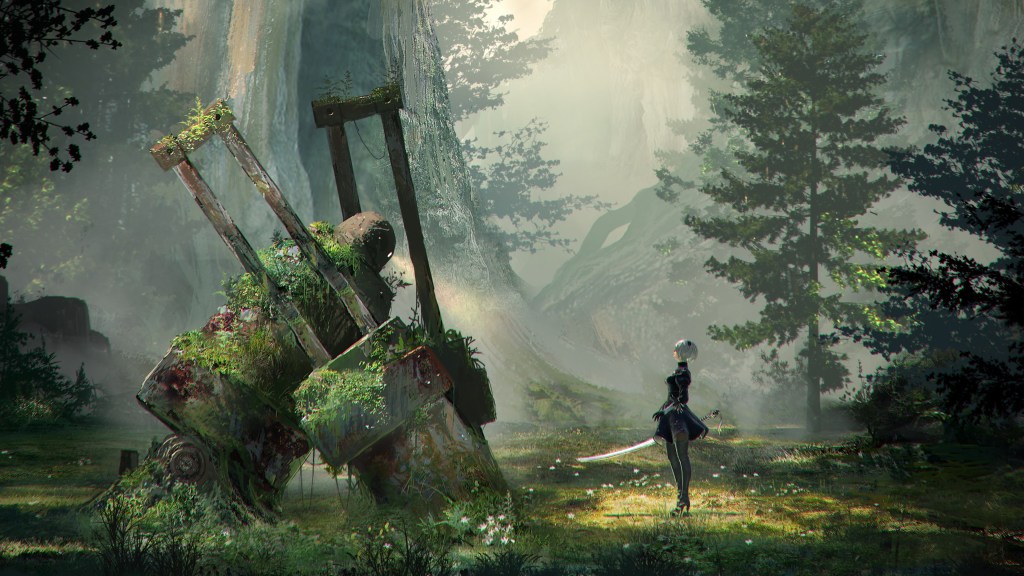
At first glance Nier: Automata looks like a grab-bag of anime cliches: young heroes piloting giant mechs, impractically huge swords, adorable robots, existential debates, misplaced fanservice. It takes a while for it to cohere, but in the meantime there’s a core dump of gameplay mechanics that need mastering: hack’n’slash, run’n’gun, shoot-em-up… fishing? You’ll explore a bland post-apocalyptic open world, hack enemies via an arcade-style minigame, and customize your character abilities by slotting in chips with varying memory costs. I was on the fence until I stumbled upon a carnival being conducted by robots, and over the next many hours I started to lose myself in the pure weirdness, but also the unexpected depth of Nier: Automata’s world.
Central to Nier: Automata’s cult fandom is that you’ll have to play the game multiple times to fully experience its twisty science-fiction tale. Our heroes are the stoic android 2B and her sympathetic backup 9S. The first two playthroughs cover the same span from their respective perspectives. This is a really cool idea, but since 2B and 9S work together for large portions, you’re required to slog through the overlap. Ultimately this pays off, especially in reaching subsequent runs, but it’s a good example of Nier’s most persistent shortcoming – a lack of discernment in occupying the player’s time.
This takes many forms: a map too big for the content such that you’ll criss-cross empty patches frequently, waves of identical grunts barraging you to the verge of boredom (and, should you choose to loot-grind, beyond), save points scant enough to impel 20 minutes of retracing your steps should you screw up, a lineup of fetch quests and deliveries whenever you step off the main path, etc. This is a great game that hides too much of its grand story and innovative structure behind filler.
Score: 7.5 / 10
–Brian
Gunpoint (2013)
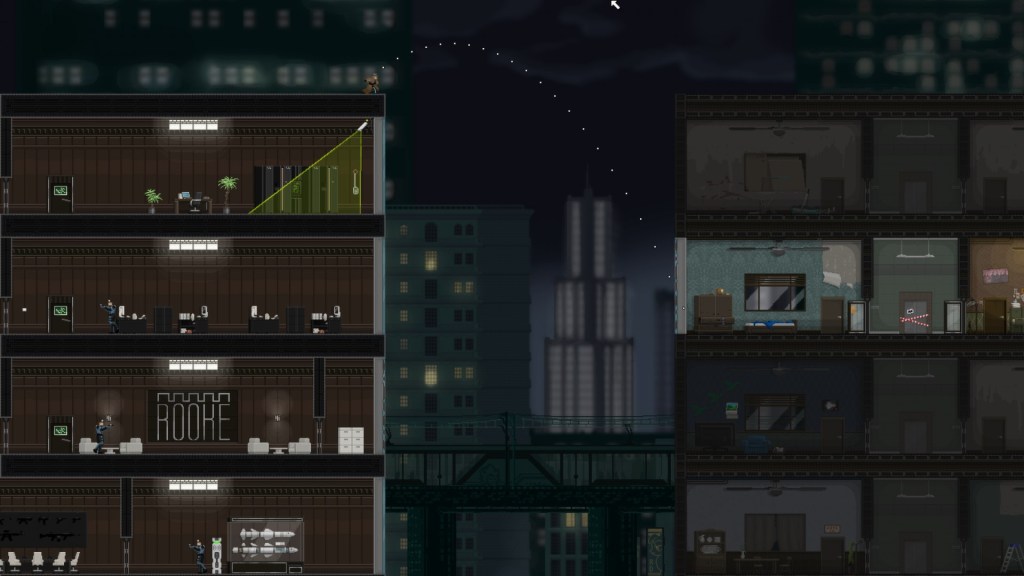
When Gunpoint works, it works by shrewdly combining ingredients that you wouldn’t expect to gel: gritty noir with peppy humor, platforming action with brainy stealth, retro graphics with futuristic gadgets, and a simple interface with a complex spy thriller plot. Gunpoint is the charmingly anachronistic tale of a detective with a pair of far-flinging “bullfrog hypertrousers” who gets caught up in a web of murder, corporate espionage, and deceit.
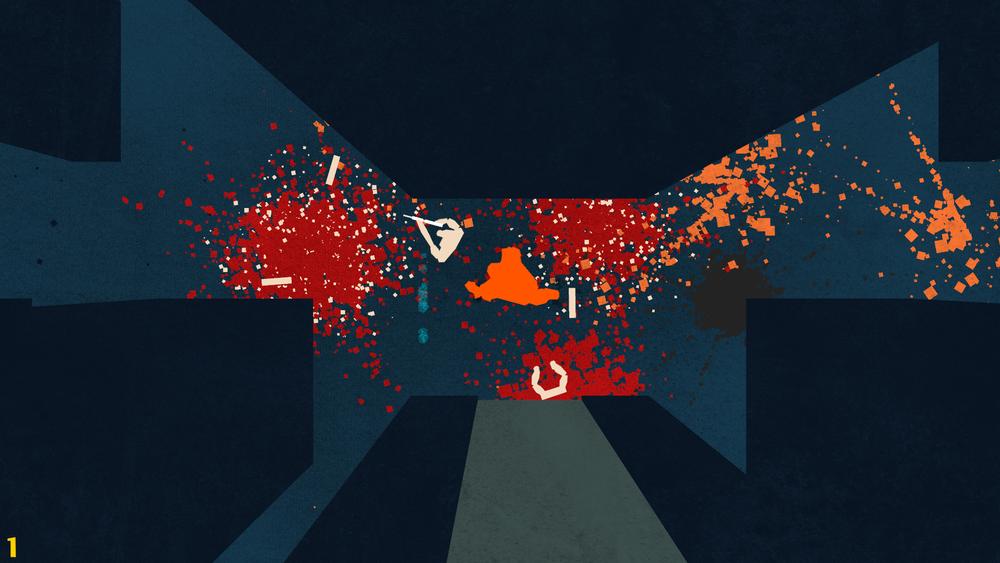
Gunpoint’s gimmick is that you can pause the game and switch to a schematic of the building you are burgling to rewire light switches, alarms, sealed doors, elevators, and even guns. By swapping around color-coded connectors you can trick guards into rolling out the red carpet for their formerly impenetrable fortress. It’s a clever mechanic that makes for emergent gameplay. A few breaking-and-enterings in and you’ll be cackling at your own mischievous contraptions and unlikely heists.
However, the same flexibility that allows for multiple solutions also makes for uneven level design, with brute force and recycled tricks too often rewarded. Gunpoint feels like the prologue of a game that’s missing a second and third act, with new abilities and harder obstacles just over the horizon, but which never arrive. At only 2-3 hours of gameplay, Gunpoint is over just as it starts to get interesting, and I have to admit I felt disappointed by the unfulfilled potential.
Score: 5.5 / 10
–Brian
For more in this series see 2019 Trios.
 Significant Gamers