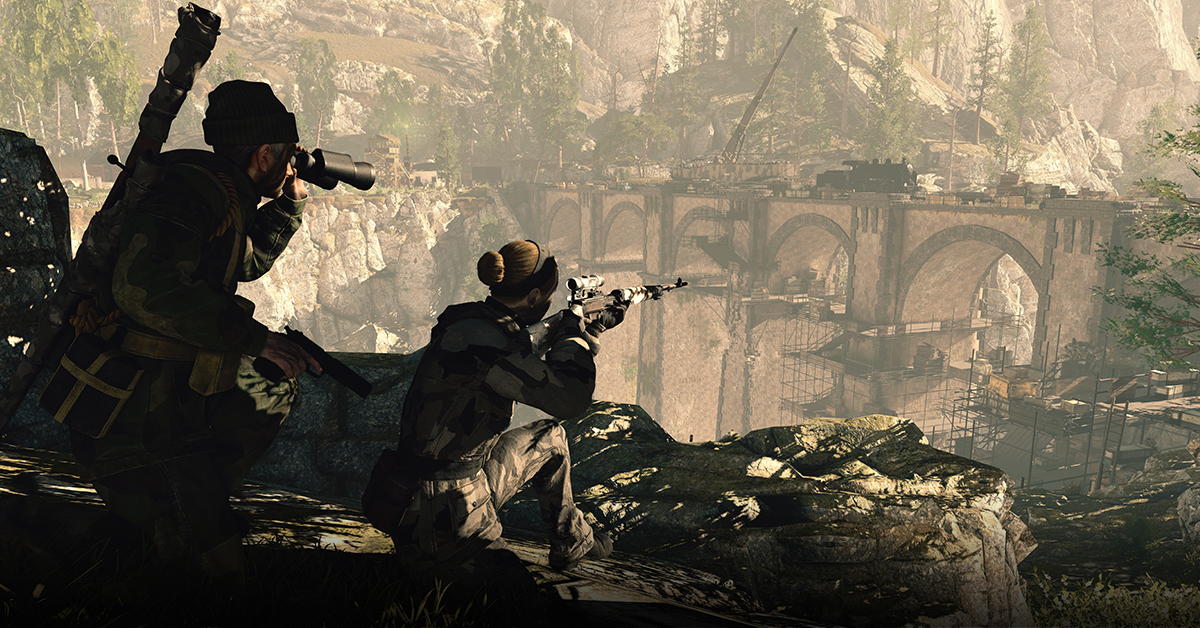
Sniper Elite 4 for PS4; Image credit: developer (via Steam)
Sniper Elite 4 (2017)
Anyone who shares this hobby knows that games can be so much more than shooty murder simulators and is sick of having to defend them. That said, Sniper Elite 4 is such a good shooty murder simulator! It will make even a peace-loving, puzzle-platformer like myself wonder if their true calling wasn’t long-distance assassin. This is a game that understands how inured I’ve become to headshots. It knows that I need my accuracy recorded down to the level of “eye shot.” That my mastery of sniping should be memorialized with zoomed-in, slow-motion x-rays that showcase every shattered bone fragment and punctured vital organ perpetrated by my bullet. And it’s all morally OK (right?) because I’m killing Nazis, and who’s going to defend Nazis?
WWII-era Italy’s undulating hillsides, cobblestoned alleys, exposed bridges, perch-festooned monasteries, and foliage-dense vineyards have been exquisitely distilled into ten sniper-friendly jungle gyms. The fun tends to evaporate if you charge in guns blazing, but for those keen to patiently await the perfect shot (adjust the range on your sight, hold your breath to steady aim, gently squeeze the trigger) and set booby traps on the trail of corpses littered behind you, this is a magical experience.
For players wisely using the cutscenes to take restroom breaks, the plot has something or other to do with guided missiles.
Score: 8 / 10
–Brian
Planescape Torment (1999)
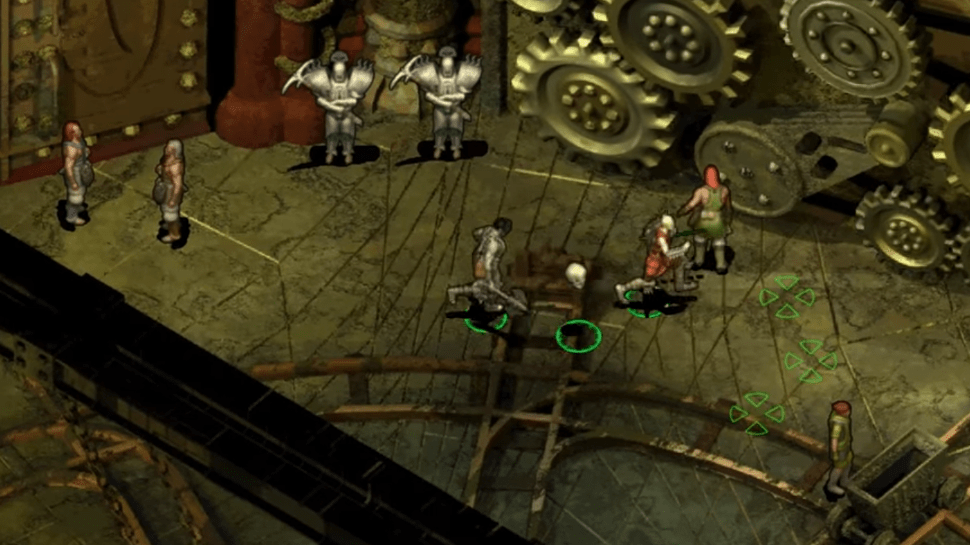
Despite losing myself in Baldur’s Gate II a couple decades back, I approached Planescape Torment with caution. Would those old BioWare infinity engine games still hold up? Would there be a lot of fiddly dungeons and dragons systems to relearn (oh god, yes) and tedious dungeon grinding to be weathered (actually, no)? What I discovered is a game that still works by virtue of its unparalleled world-building, original story, bizarre characters, and deep themes. What was always great about Planescape Torment remains timeless.
Some of the gameplay design decisions have aged less gracefully. The role-playing is based on AD&D 2nd edition, which to an outsider like myself, is needlessly complicated and confusing. Understanding armor class and spell casting is unintuitive at first, but not hard once explained. Unfortunately, that explanation isn’t actually in the game. (I actually adore the tutorial area, but isn’t very forthcoming about how to actually play.) I’d recommend reading a few online guides before even doing character setup: in contrast to most games where strength and constitution are emphasized, wisdom, intelligence, and charisma are the critical stats. This is reflected in the game itself: combat is certainly present, it will even occasionally kick your ass, but clashing swords takes a backseat to dialog and exploration.
It helps that your nameless amnesiac character is immortal, so dying is just an inconvenient setback. At the heart of the story is understanding this immortality – a quest that takes you across a land as deeply scarred by your past lives as your own tattooed body. The central city of Sigil is a crossroad between inhospitable planes of warring alignments and clashing clans of rival philosophies. This is a world where beliefs shape reality, where a floating skull might be your best friend or a faithless liar (or both), and where finally learning your own name (surprisingly easy to miss) is a greater achievement than any boss battle.
Score: 9 / 10
–Brian
Star Wars: Knights of the Old Republic (2003)
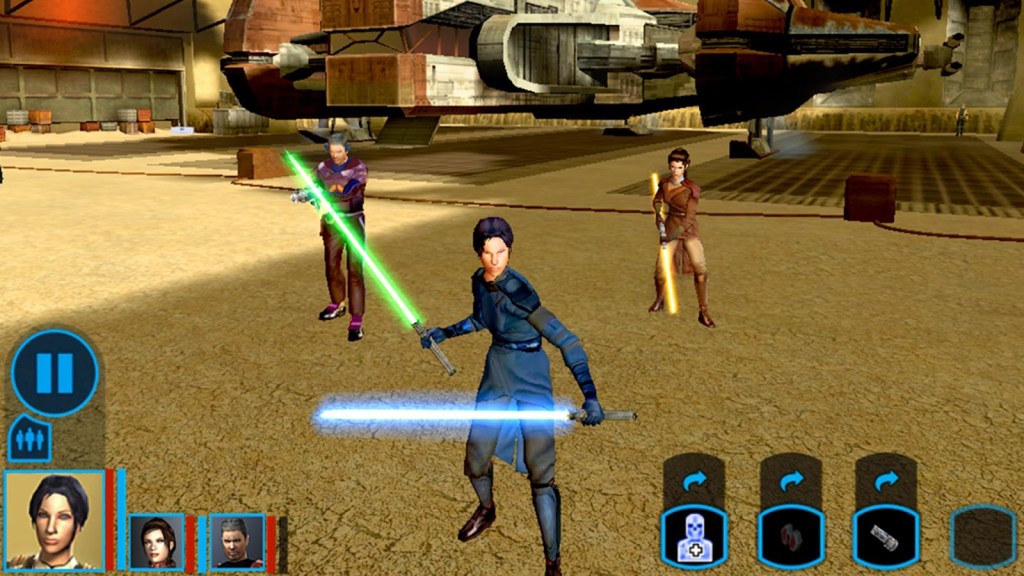
Few properties know how to pull the levers of fandom and hype like Star Wars, and customers oblige by pouring out money like a clone army. Knights of the Old Republic (KOTOR as we say on the internet) is no different than the films in that regard: it established a popular and critical reputation that latecomers might find a bit… excessive. But even Star Wars skeptics like myself have to admit that the lore-rich, alien-packed, and infinitely permutable setting is tailor-made for video game adaptations, and there have been no shortage. Jedi abilities, in particular, are pretty much the perfect RPG-friendly power fantasy, so it’s no surprise that my favorite Star Wars game crams it into the title twice: Jedi Knight 2: Jedi Outcast.
KOTOR was ambitious for 2003, and that ambition remains impressive even when underserved by the technical and mechanical elements. The story begins in media res with your character escape podding away from a Sith ambush and trying to remain undercover on the metropolis of Taris. Famed Republic Jedi Bastila Shan is rumored to have survived as well, but lost deep with caste-delineated Taris interior. In due time you’ll visit several mostly-ugly planets, recruit diverse mostly-interesting allies, and, of course, get inducted into the Jedi order yourself.
Storytelling is KOTOR’s strongest asset, and it makes full use of the Star Wars universe to stretch its narrative muscles. Skip over the rote framing device leading you from one planet to another, and get lost in Wookie politics, dubious bounty hunting, and an undersea murder mystery (the latter, sadly, slightly botched in the execution of the trial sequence). Fall blissfully down dialog rabbit holes with fan-favorite assassin-droid HK-47, cynical ‘grey’ Jedi Jolee Bindo, and vulnerable Twilek punk Mission Vao. Experience maybe the best twist in video game history (it still holds up!).
But to do all this, you’ll have to actually play the game, and there’s the rub.
Caught halfway between a turn-based tabletop RPG and a third-person action game, KOTOR emerges as an awkward, discordant hybrid. The player must constantly switch between characters to assign actions lest the AI assistant squander force powers or walk into clearly visible landmines. Actions unfold as a series of thinly-disguised dice rolls, constantly interrupted by pausing. Enemies impotently swing lightsabers in front of each other for several minutes, with a good swing causing a red number to appear and a bad swing (an identical animation) having no effect. There’s even “saving throws” for fortitude, reflex, and will, but 40 hours in, I still had no idea how they work or if they matter. The minigames are even worse: luck-based card game Pazaak and curve-free Swoop racing.
KOTOR is celebrated for giving the player freedom, but I found this vastly overstated in practice. Stealth is so broken it should probably have been cut. Traps are tedious, buggy, and likely to backfire. Charisma, dialog, and negotiation can in no way alter the main quest. Hacking is viable in the very specific cases where it is available, but the implementation is laughably shallow. Basically you can choose to approach most situations with melee or ranged weapons. After you get a lightsaber, only the very stubborn (like me) will continue with ranged.
I think that the “freedom” that people actually mean when they talk about KOTOR is the choice between light vs dark, and to be honest, this is where Star Wars’s manichean essentialism undermines a story that deserves better. The real world, or even a decent fictional world, is more complicated than this binary. Too often KOTOR, against its more nuanced instincts, forces you to roleplay as a prissy do-gooder or a raging asshole, with nothing in-between.
Score: 6 / 10
–Brian
For more in this series see 2019 Trios.
 Significant Gamers