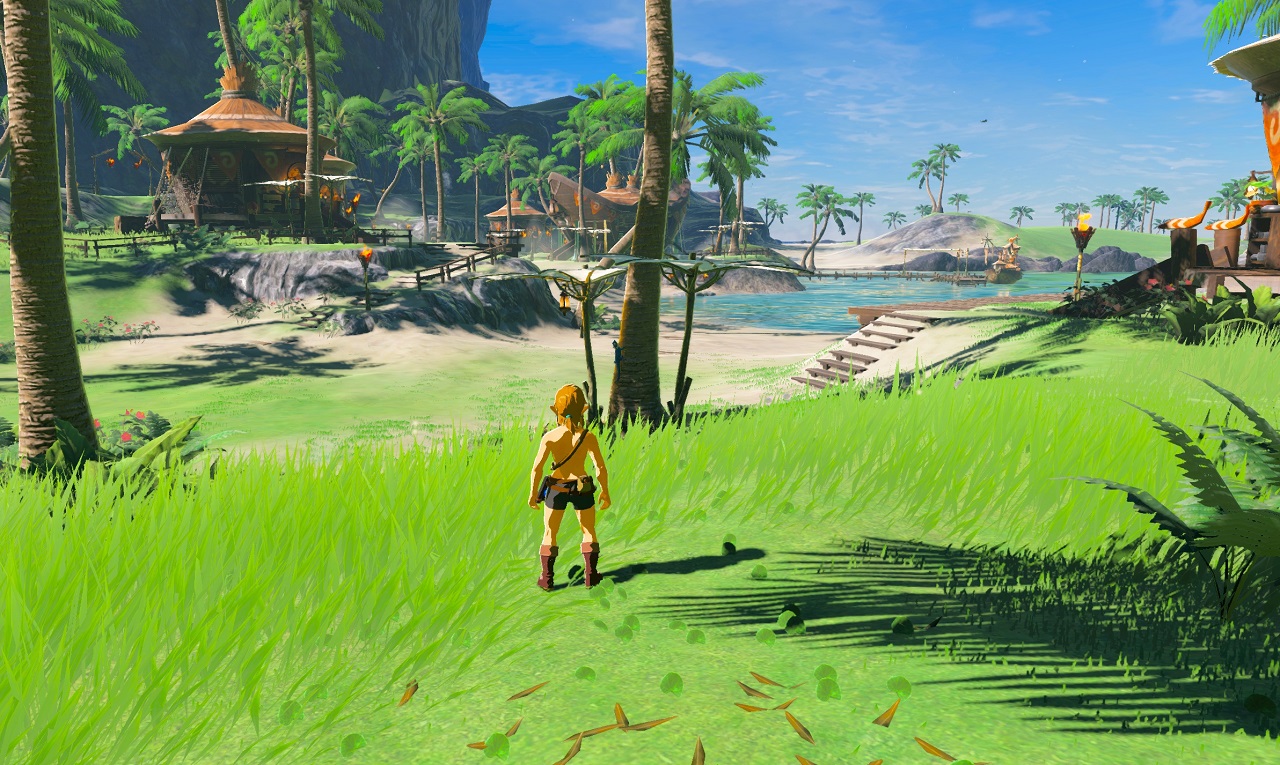
Zelda: Breath of the Wild for Nintendo Switch; Image credit: Tech4Gamers
Zelda: Breath of the Wild (2017)
What more can be said about Breath of the Wild? It’s so obviously good, so unanimously praised by critics, and so deservingly loved by fans. Perhaps just to be contrary I will open by finding faults just to prove they exist? Here goes…
These are some of the least memorable bosses in a major Zelda game, and they all basically look the same. For how large the world is, I felt like I kept running into the same handful of enemy models. The recipe system is so cumbersome (no catalog feature?) that most players ignore it or only bother with a small fraction. The nicest thing anybody can say about the weapon durability is that it forces players to try out different fighting styles. Too many combat trial shrines and not enough full-fledged dungeons. Another silent protagonist with a cipher personality.
But if I’m being honest, the things I remember most about Z:BotW (I finished it in January 2019, so I’m already nostalgic) aren’t the faults. Those rarely got in the way of the fun. What stands out is the excitement of cutting a swath towards a distant tower, or finally getting a hardwon glimpse over what was previously the horizon. It’s losing whole afternoons hunting for koroks (adorable leaf creatures hidden absolutely everywhere) just for the sheer pleasure of peering into every nook and cranny. It’s the emergent gameplay of the physics engine where magnetism and electricity, fire and explosives, water and ice, momentum and stasis, all come together in clever puzzles and half-baked experiments.
The gaming industry has many franchises with enduring reputations — Mario, Pokemon, GTA — but for me Zelda has remained at the top because its consistency doesn’t mean complacency. Zelda is the rare blockbuster that continues to innovate. I look forward to mapping each new Hyrule like unwrapping a gift from someone who knows me well: I can expect delight, surprise, and gratitude.
Score: 9.5 / 10
–Brian
Breath of the Wild was my first foray into the land of Hyrule. I went in with very little knowledge about the franchise, other than the fact that it was fantasy-based and I would not be playing a character named Zelda.
From the very first tutorial area, I loved the game. It was friendly to those who had never played before – giving hints and clear instructions – but also was cognisant that many players knew the series well. Each pot smashed and corner turned brought something new and interesting while still guiding the player through the initial stages of the game and preparing them for the vast open world to come. This was also where they introduced the concept that your items can break. While controversial among die-hard Zelda fans, it wasn’t anything more than a mild nuisance to me.
After completing the tutorial area, the entire world opens before you. As this was the first large open world game I had played, I found it more than a little overwhelming at first. Where do I begin??? Thankfully, the game has a generous save system, so my plunge-ahead-and-hope-not-to-die strategy wasn’t always bad.
In addition to the game being so huge, the amount of detail in it is astounding. From recipes written on the walls of stables to the plethora of koroks to find, it seemed I was constantly discovering something new. As Brian said in his review, it was easy to lose hours searching for resources or hidden surprises. This wasn’t frustrating, but rather led to a feeling of surprise whenever I checked my real world clock. (BotW quickly became a game that I played with an alarm set to remind myself to go to bed, do chores, go outside, etc.) The sense of exploration when uncovering a new biome and the accomplishment of finding just the right spot to take a picture was so satisfying.
If I had two complaints about BotW, they would be thus: 1) more puzzles and 2) provide a recipe book where you can record the successful (and unsuccessful?) combinations of food and what bonuses they have when cooked.
I absolutely loved this game.
Score: 10/10
-Kelley
The Last Guardian (2016)
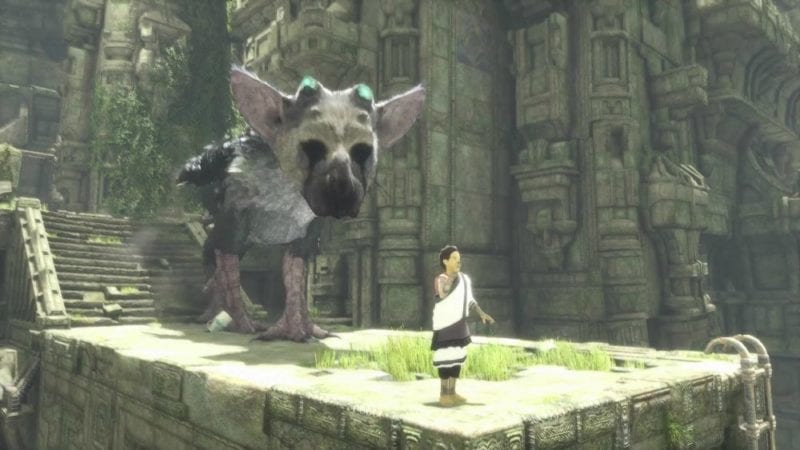
In my mind, the debate over whether video games are art is inextricably connected with designer Fumito Ueda. His games Ico and Shadow of the Colossus were among the first games that cast a spell over me with their control of atmosphere and mood and to evoke interior states using purely visual tools. Ueda’s austere sun-bleached ruins, reminiscent of de Chirico landscapes, are worlds of lonely mystery and ominous beauty. Stone structures and monumental geography dwarf the player’s frail, nameless characters, and beg to be explored. With non-verbal story-telling, Ueda builds powerful emotional connections between the player and a single oasis of sympathy. In Ico there’s a princess beset by shadow creatures. In Shadow of the Colossus, it’s a loyal horse. In The Last Guardian, it’s Trico, a blood-splattered mythical beast that you wake up next to in a cavernous castle. He looks something like a puppy crossed with a bat, but giant-sized.
Trico is both the best part of The Last Guardian, a pet/steed/companion that represents a culmination of Ueda’s quest to capture the relationship between awkwardly asymmetric beings that share an elegantly symmetric bond. Trico’s animation is a constant marvel, full of lifelike animal mannerisms and a naturalistic interplay of muscle and feather, movement and expression.
Trico is also the worst part of The Last Guardian, since he’s exasperatingly independent and often willfully ignores your inputs, dragging out otherwise excellent traversal puzzles by making them a pain to execute. I think The Last Guardian could have benefitted from testing the player’s patience less, but it rarely mars the fuller experience of leaping between the castle’s spires, evading its armored soldiers, and climbing towards the enigmatic force at the center of it all.
Score: 7.5 / 10
–Brian
Timespinner (2018)
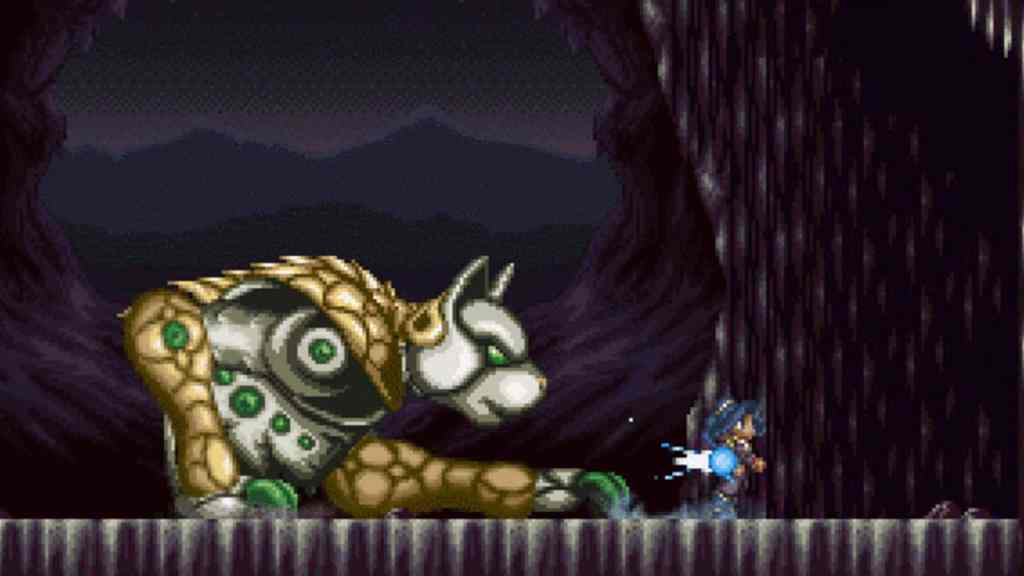
The first time I saw a trailer for Timespinner, I kicked myself for missing the Kickstarter. A female-led, time-travelling metroidvania sounded so promising. And yet getting my hands on the long-awaited release was sadly disappointing.
Timespinner clearly draws from all the right influences. The retro art style is convincingly vintage SNES. Old friends like double-jumping and upgradable weapons are present and accounted for. You’ll also get some more distinctive abilities like friendly familiars and sand that lets you temporarily freeze time. What’s missing is inspiration. Timespinner homages so hard that it feels like a retread. Much of the level design is routine, which is especially irksome because it could have been so much more interesting if it put its time-travel mechanism to better use. The sidequests are especially guilty of padding (kill X of enemy Y, collect X of resource Y, etc.), but even the central characters and overarching narrative, though well-intentioned, felt a tad flat.
I didn’t hate my time with Timespinner, I just can’t think of any highlights. In a genre with so many strong alternatives (Ori and the Blind Forest, Hollow Knight, Axiom Verge, to name a few), Timespinner fails to distinguish itself from the herd.
Score: 5 / 10
–Brian
For more in this series see 2019 Trios.
 Significant Gamers