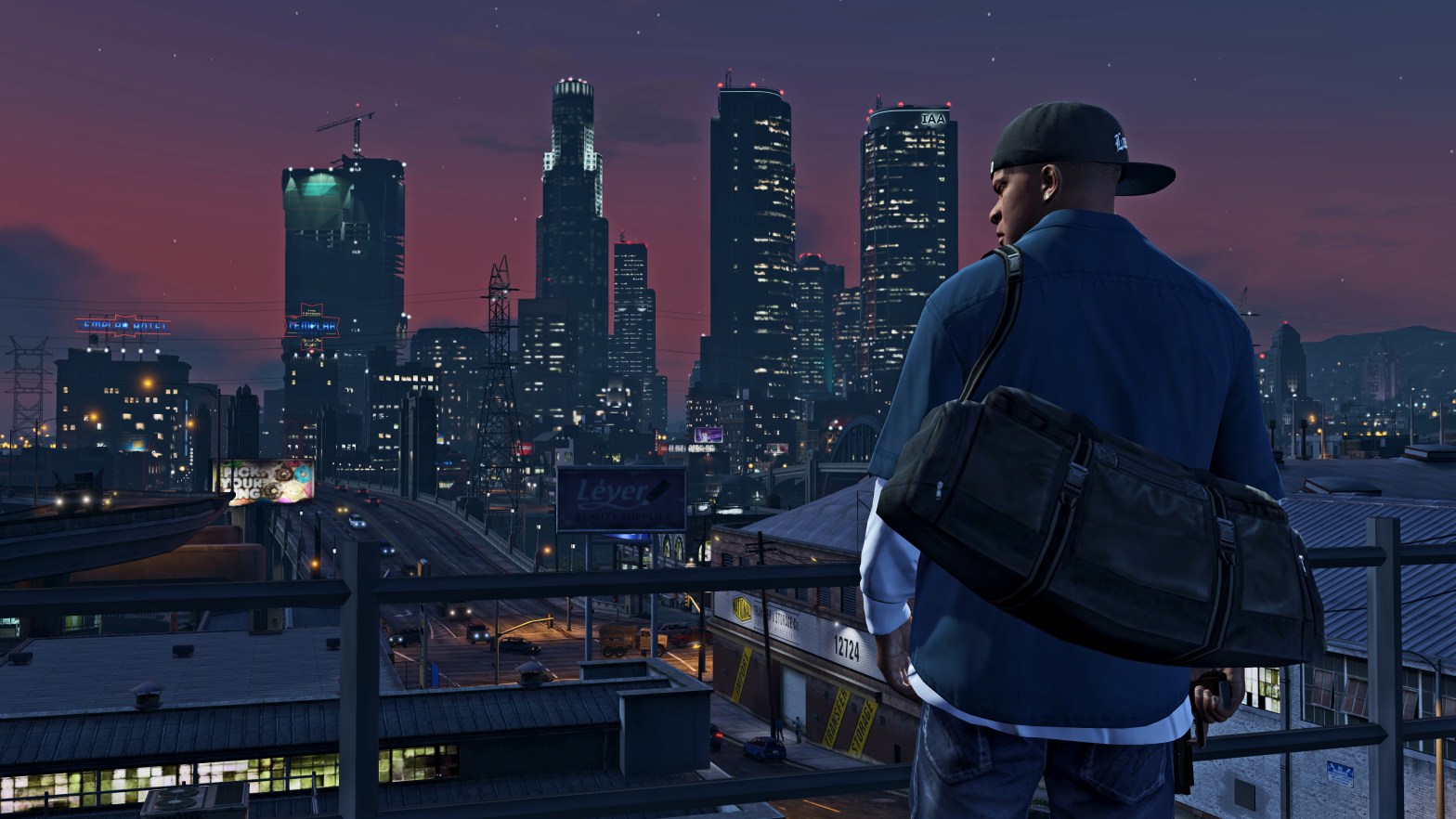
Grand Theft Auto 5 for PC; Image credit: Rockstar Games
Grand Theft Auto 5 (2013)
Of all the games I played in 2019, Rockstar’s 2013 GTA installment is the one I find hardest to rank. The gameplay holds up, “a high-water mark in open world design” as they say, and the franchise continues to innovate even as it polishes its core mechanics. But the juvenile satire has aged poorly and the obnoxious characters grate.
Let’s dive into the good stuff. The LA-based Los Santos is incredible. The various regions and neighborhoods are distinct, but cohesive, and just hotwiring cars, speeding around, crashing, and dispensing a bit of mayhem is a blast. The patterns of life and attention to detail are so good you often forget it all had to be programmed. You can turn on the radio and listen to literal days of audio content, licensed and original (or in the case of Tangerine Dream, both).
As usual for the franchise there is a ton of stuff you can do while ignoring the story, many of which would’ve once been considered full games in their own right: racing, golf, tennis, planes, shooting ranges, rampages, taxi cab fares, location-specific events. There’s also a ton of optional content I found boring or poorly implemented (playing the stock market, triathlons, hang-gliding, helicopters, collectables, real estate, hunting, all the RPG stat-boosting stuff) but that probably appeal to others and certainly adds to the general sense that you can do anything and everything. Except the firetruck and ambulance missions of previous titles, conspicuously absent here.
Pre-5, I wouldn’t blame anyone for neglecting the main missions, as they were often frustrating chores compared to venting steam in an urban sandbox, but GTA 5 takes a more cinematic and streamlined approach. For starters, we finally get mid-mission checkpoints! Even more refreshing is switching between three playable characters: gang-member turned ambitious repo-man Franklin Clinton, unhappily retired bank robber Michael De Santa, and psychopathic redneck meth-kingpin Trevor Philips. The story sees them uneasily teaming up to stage elaborate heists where the player chooses the methodology and hires henchmen. The three leads have special abilities (respectively, bullet-time driving, bullet-time shooting, and berserker combat) providing some strategic decision-making about when and where to switch between characters and trigger their powers.
But the characters themselves and their stories falter. For a work with a “mature audiences only” reputation, GTA refuses to grow up. When I played GTA 3 in 2001 I was tolerant-bordering-on-mildly-amused by the broad satire, but twelve years later why were they still somehow treading water with the same shtick? Forget the overblown controversies about sex and violence; that’s just savvy marketing. The problem with GTA is the lazy stereotypes and restrictive worldview. The writing is on auto-pilot, loudly saying little. The indictments of the entertainment industry ring especially hollow coming from what is now the most financially lucrative entertainment product ever.
It is possible for a game to mix thematic criticism of capitalism, violence, and machismo with gameplay that celebrates it, but it’s a balancing act requiring finesse Rockstar lacks. I like satire, but good satire should be funny, meaningful, and on some deeper level true to life. I think Rockstar is capable of delivering that, but it probably means that their flawed heroes should occasionally make rational decisions, have selfless moments, experience emotions other than anger, form real relationships, react to trauma, and, you know, seem human. And, after 11 installments, can’t we have a story from a female perspective? I hope Rockstar does some soul-searching, and I hope they find something there. And I don’t just mean the missing firetruck minigame.
Score: 9 / 10
–Brian
Super Mario Maker 2 (2019)
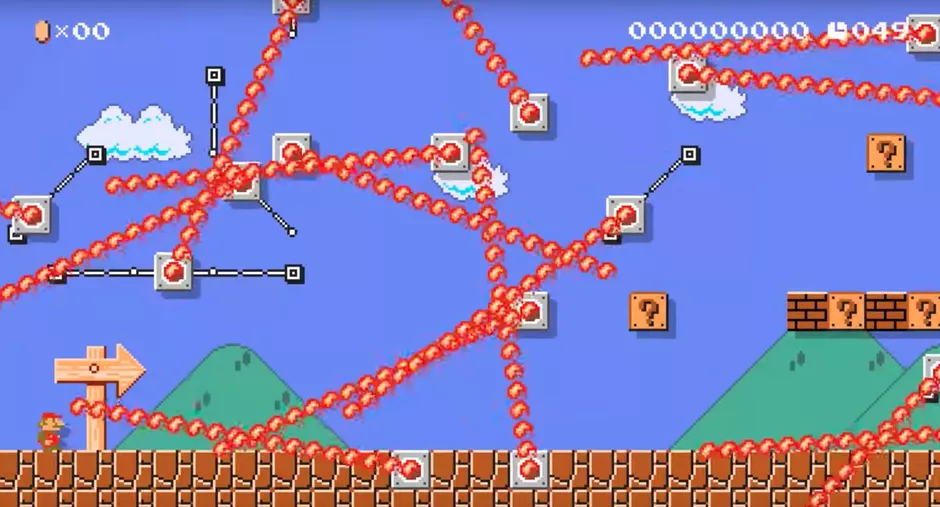
Nintendo’s Mario team(s) have had hundreds of good ideas in the years their mascot has served as de facto metonym of the video game industry at large. The hard-working Italian plumber has side-scrolled, kart-raced, golfed, partied, gone 3D and flattened back out again, and has never lacked for variations on villains, dungeon designs, death traps, acrobatic moves, or power-ups. But one of Nintendo’s best and bravest inspirations is to take their overstuffed portfolio of platforming components and put it at the disposal of the untutored masses. Enter Super Mario Maker, a user-friendly toolset for every aspiring level designer who grew up dropping Bowser into lava and dreaming green pipedreams.
SMM2 comes with a campaign mode that showcases many of the features, palettes, and potential combinations available to creators. It’s also an entertaining and hefty level pack in its own right. Mario titles aren’t typically known for their plots, but SMM2’s “story” is especially thin. While I appreciated the variety on display, it occasionally reminded me of a buffet with an overwhelming selection and not a single memorable dish.
The real draw of SMM2 is the roiling mosh pit of crowd-sourced content, where you’re equally likely to find yourself in the broken garbage of a child dilettante, the torture chamber of a fiendish troll, or the lost masterpiece of the next Shigeru Miyamoto. If I’m honest, I’ve never experienced this mode directly, but Kelley and I are proudly addicted to youtube videos by twitch-streamer Ryukahr where he faces off against the SMM’s good, bad, and ugly. These make perfect 15-minute nightcaps of mindless entertainment, and I’ll always be thankful to SMM for giving us that.
Score: 7.5 / 10
–Brian
I was trying to figure out what I could add to Brian’s review that would add a different spin. Instead, I’ll promise that later in the year, I will create a new post on this blog that details my first experience creating and uploading a SMM2 level. Wish me luck and fortitude from the trolls (including Brian).
Score: 8/10 (but subject to change after my experiment)
-Kelley
Vignettes (2019)

Vignettes is a mobile game where you rotate simple objects. Seen from certain angles object A might look identical identical to object B and you’ll exploit this to magically transform one item into another. For instance, a drum seen edge-on might become a lampshade. It’s a simple mechanism (probably better seen than described), that provides little bursts of delight. Unfortunately, it isn’t much to sustain a full game. On a few occasions Vignettes recognizes this and builds higher level puzzles onto its central concept (a map section and Halloween DLC are the best examples), but for the most part Vignettes is a quick, quiet game with a relaxing, untaxing vibe.
Score: 5.5 / 10
–Brian
For more in this series see 2019 Trios.
 Significant Gamers