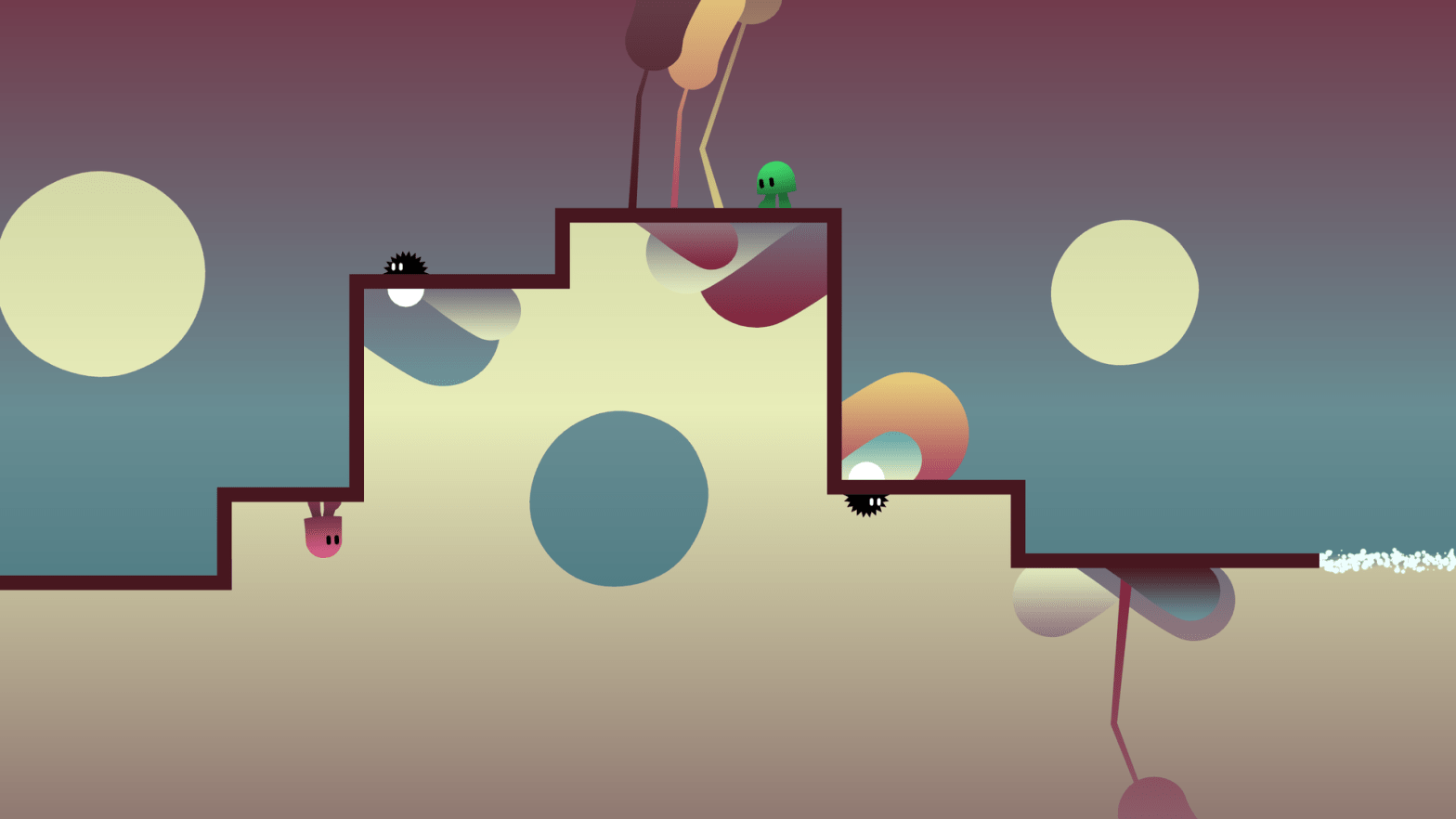
Ibb & Obb for PC; Image credit: gamingonlinux.com
Ibb & Obb (2013)
Kelley and I play a lot of co-op together, and it’s always interesting to see how game design decisions effect are interactions: pursue our individual whims or stick together as a team, communicate constantly or silently collaborate, compete for loot or share resources strategically. Ibb & Obb, a puzzle platformer whose cute cartoon art (reminiscent of My Neighbor Totoro) masks a brutal gauntlet of intellectual and dexterity challenges, put some stress on those interactions. I screwed up. She screwed up. There was shouting. We loved this game!
Ibb & Obb eases you in, but makes it clear from the get-go that collaboration is absolutely necessary. You literally run into a wall until you figure out how to jump on your pal’s head and have them boost you higher. Much of the complexity comes from your ability to pass through the ground into a mirror world where gravity is reversed. As you progress through 15 tightly-designed stages, the game introduces new complications like enemy monsters, player-specific portals, bubbles of upside-down gravity, boost pads, and wrap-around physics. There are optional crystals to collect which control how hard your avatars party at chapter breaks and we became rabid about achieving maximum dance. For those who believe their co-op relationship can survive any trial, try the hardcore hidden levels.
Score: 8 / 10
–Brian
Ibb & Obb was an extremely challenging co-op puzzler with a charming aesthetic. While it started relatively easy with needing to jump on your partner’s head in order to reach a new platform, it quickly became much more complicated endeavor. There were trampoline platforms, gravity switches, and a lot of communication breakdowns between us as players. The game was pretty kind about resetting when we died, but there were some long sections that were rather tense. It was worth it for the end-of-stage dancing.
In all, a great co-op puzzle game. Highly recommend.
Score: 9 / 10
-Kelley
Bayonetta (2009)
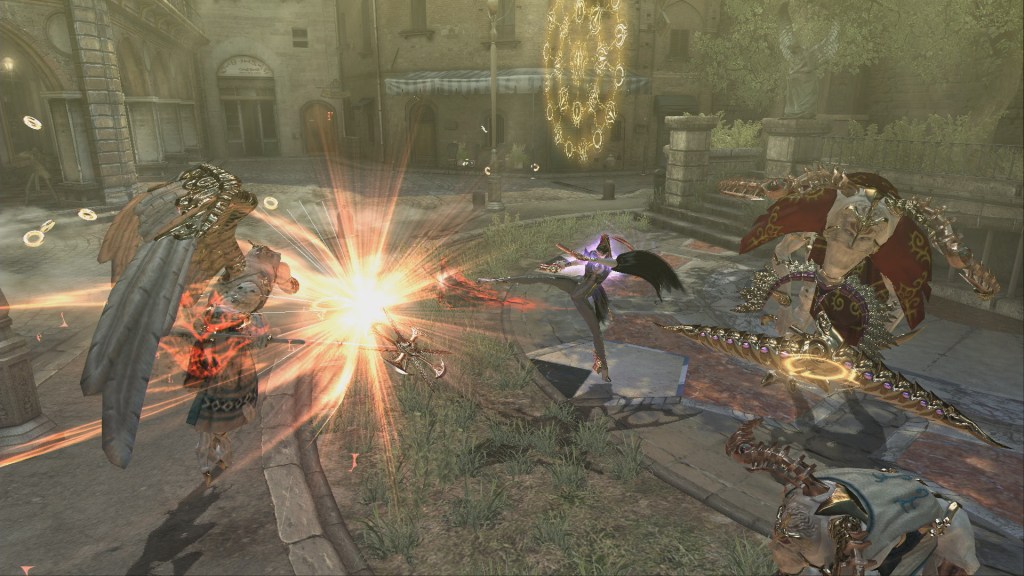
I’m not sure if there’s a translation issue at play, but Bayonetta’s Wikipedia page quotes the director as saying that the theme of Bayonetta is “partial nudity.” It’s accurate. Our heroine is Bayonetta, a certified product of the male gaze who wouldn’t be out of place in a strip club ad, and yet she managed to subvert many female video game character cliches. It helps that she has the levels of capability, agency, and casually badassity usually reserved for male protagonists like director Hideki Kamiya’s previous creation, Dante of Devil May Cry. She’s also a shapeshifting witch who sports reading glasses.
Bayonetta is over the top in every sense, and the earlier you accept its ludicrous and violent aesthetic, the better your experience will be. For starters, the plot is a mishmash of action movie cliches (trying ever so hard to be cool, and succeeding maybe 50-50) and distorted christian mythology. This translates into surprisingly great gameplay: frenetic hack-n-slash combat against an inventively-rendered angelic host. All four of your limbs are weapon slots, so feel free to equip shotguns on your high heels or shred cherubs by breakdancing on them with magic ice skates. You hair summons demons. The epic boss battles are monstrous incarnations of the cardinal virtues: Courage, Justice, Temperance, and Prudence.
You can get pretty far fighting just by mashing buttons (wicked fun!), but there’s hidden depths. For all the self-conscious shallowness, the same is true of the rest of the game. Bayonetta’s quest to reclaim her past hits a trope I’m partial to: the loner who reluctantly forms meaningful attachments, in this case with her best-friend-turned-rival-turned-(spoiler alert)-best-friend Jeanne and a young girl who (spoilers everywhere) is actually her younger self. There’s also a token human male love interest, which Bayonetta, and the game as a whole, treats with mild disdain. He’s largely decorative when not filling in as the damsel in distress.
I have mixed feelings about Bayonetta. It’s doing that Charlie’s Angels (Charlie’s Demons?) thing where you have your cake and eat it too, creating an empowered female action hero, but laying on enough sex appeals that even Joe Misogynist can have a good time. But it has a clear and distinctive authorial voice, style to burn, and a missile riding sequence. I support those things.
Score: 7 / 10
–Brian
Human Resource Machine (2015)
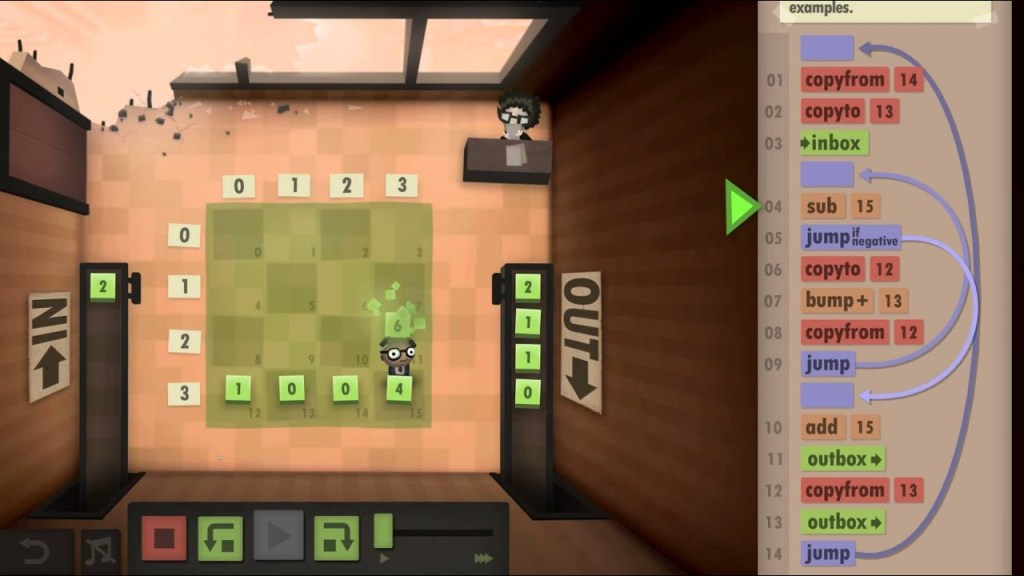
There’s a subgenre of puzzle games where you complete programming tasks, often using an unusual visual programming language or under specific syntax limitations. Dry as this probably sounds, sometimes I find these to be brilliant tests of coder talent (SpaceChem is my personal favorite), but at other times it can be a little too close to my day job.
Human Resource Machine is in many ways, a parody of day jobs, with you playing a balding salaryman assigned arbitrary tasks by a dystopian megacorporation. Each level, classical programming problems like multiplication, Fibonacci sequences, and string storting, are used as a snapshot from a year in the career of our nameless drone. As time passes and your work gets more complicated, we see the world collapsing outside, caught in odd glimpses of news coverage, half-suppressed cries for help, and vaguely amusing cutscenes.
HRM never quite came alive for me. The challenges are often trivial for coders, but boring for non-coders. The story is so abstract, it’s hard to attach any meaning to it. Our hero is intentionally a non-entity. I liked attempting to solve programs in the fewest commands or the fewest steps, but little else felt fulfilling.
After finishing HRM I was not surprised to learn it was developed by Tomorrow Corporation. Their previous work includes the critically-acclaimed, but vastly overrated Little Inferno, which depending on who you ask, is either a waste of time or a satire of wasting time, a distinction I was not able to discern.
Score: 5 / 10
–Brian
For more in this series see 2019 Trios.
 Significant Gamers