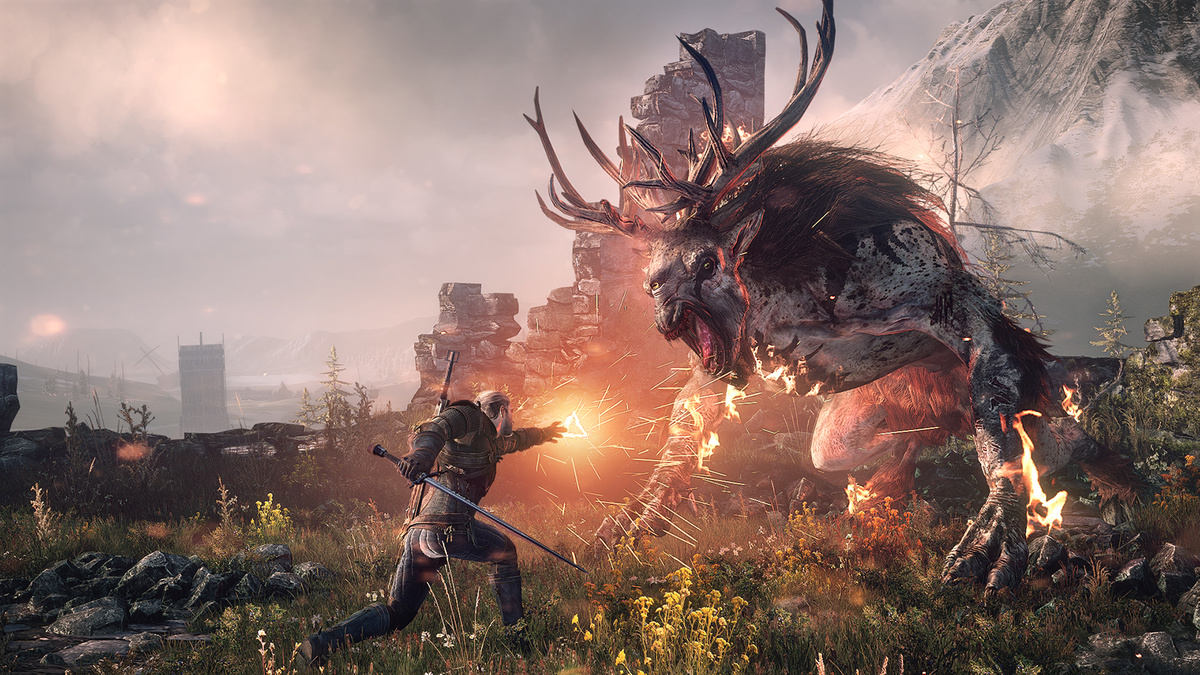
Witcher 3 for PC; Image Credit: Pocket-lint
The Witcher 3: Wild Hunt (2015)
When I was school-age, my heart would jump at the prospect of a new 100-hour RPGs. What better way to stretch my meager resources for maximum entertainment? But there comes an age where video games take up a smaller proportion of time and attention, and most of those games elicit something between an exhausted groan and a hard pass. Random battles? Dungeon labyrinths? All that grinding for XP and loot? It takes a work like Witcher 3 to remind me that a grueling epic can be worth it.
I dived into the series having bypassed the first two entries and would recommend a primer for anyone doing the same, since appreciating the history, both personal and political, will help you immerse in one of the richest and deepest fantasy worlds the medium has to offer. You play Geralt, a well-connected mercenary monster hunter, who is searching for your adopted daughter. She’s fleeing from a ghost army across a war-torn medieval landscape and you’re always one step behind. Yennefer and Triss, powerful sorcerers and former flames, are among the allies aiding the hunt. They are two of the most fully-realized and capable female characters in RPG history, but they have plenty of reservations about you.
Games get labeled ‘mature’ because of unthinking violence or nudity, which are certainly on display here, but the Witcher’s real maturity comes from its willingness to grapple with a world where few things are black and white. War has ravaged the country. Both sides are guilty of atrocities. The average citizen is just looking to survive. Others maneuver for power, strive for ideals, or run amok in the chaos. Magic spells tend to impress less than food and medicinal herbs. Engaging with the cultures of exotic creatures is a thin line away from being torn apart by a monster. Witcher 3’s signature subplot is an early episode based around a local warlord called the Bloody Baron, a master class in nuanced world-building, complex characters, and tough decisions.
My only substantial complaint is that for all of Witcher’s rather over-complicated systems (more alchemy, concoctions, weapon oils, bomb types, crafting items, horse trophies, and perks than anyone needs) the combat doesn’t have enough meaningful progression to keep up with the vast open world and long winding story. I often preferred to pass time playing Gwent, Witcher’s totally unnecessary, but absurdly fun CCG minigame.
Score: 9 / 10
–Brian
TowerFall Ascension (2013)
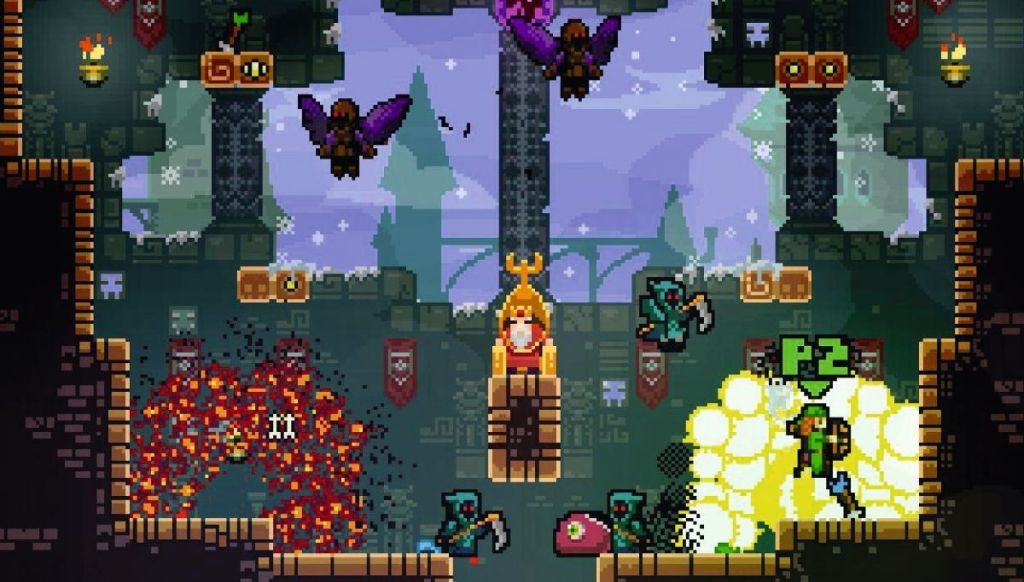
In TowerFall, each player controls a figure in a wrap-around one-screen platforming arena. Armed with your bow and a very small number of retrievable arrows, you work together to fend off waves of attacks from fantastical creatures and bosses. Oh, and there’s friendly fire. This was particularly important when considering the wrap-around nature of the screen. There were so many occasions when we thought we were going to hit a bad guy, but instead watched the shot sail off one side of the arena and into the back of our teammate on the other side. Oops?
I’ve had mixed success with archery mechanics in games. Often I don’t agree with the trajectories of shots and find the often-more-complicated series of button presses needed to activate archery to be clunky. Somehow with the cartoonish style, the simplicity of the arena design and control scheme, and sheer absurdity of repeatedly accidentally shooting your fellow player, it works in TowerFall.
Score: 7 / 10
–Kelley
TowerFall Ascension, by the creator of Celeste, is best known for its party-friendly deathmatch, but Kelley and I were both a little underwhelmed until switching to the co-op campaign. Though the controls are minimal and the “dungeons” are a just single screen where you fend off 5-10 waves of monsters (think Joust or the original non-super Mario Bros), there is enough complexity to give hardcore gamers something to master (dashing, arrow catching, wall-jumping, fast falling, looping, specialty arrows), with enough chaos to give even beginners a chance.
The co-op campaign is hard, bordering on unfair at my intermediate skill level, and a bit repetitive, but the fast reflex gameplay and relatively short sessions brings out that “just one more try” urge. I appreciated that while Towerfall Ascension could have stuck with just the casual party game audience, there area ton of unlockable secret characters and stages that kept us returning for more.
Score: 7 / 10
–Brian
Clustertruck (2016)
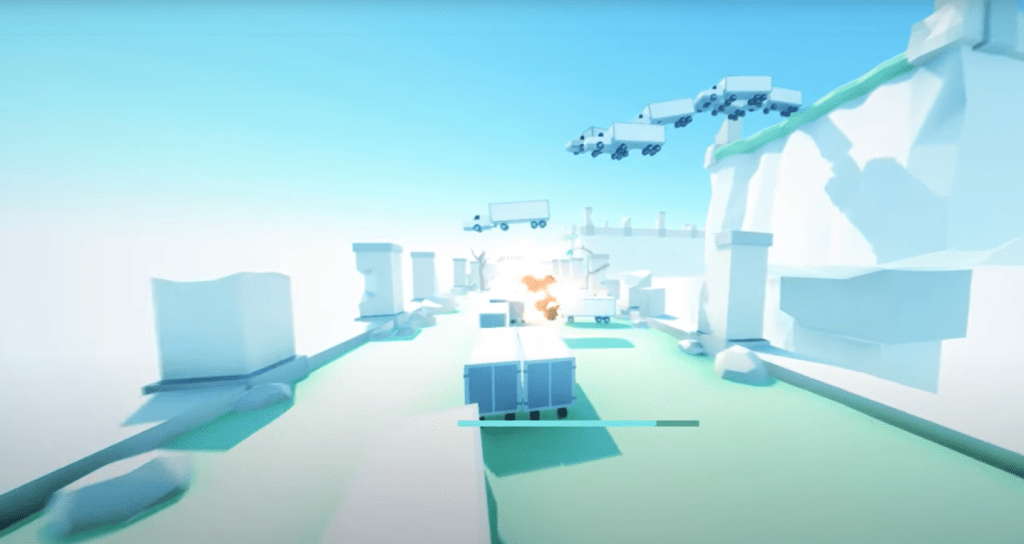
What can be said about the little-loved genus of the novelty game? Shall I discuss the aesthetic and sociological values of silly names, surreal moments, gimmicky premises, unpolished gameplay, janky physics, self-sabotaging controls, and cult fandoms? The defense of these messy black sheep lies somewhere in their amusing playfulness, child-like abandon, and the gleeful scuttling of games as art. Or perhaps that’s what makes them art? At their best they have the secret brilliance of the court jester.
But what is Clustertruck? It is the panic of leaping between semis as they careen downstream like stampeding wildebeests. It is the absurdity of taking this sweat-soaked white-knuckle serious, as siege engine hammers swing through traffic, lava rises, and laser beams splice the very air. Can you keep this up while launching off ramps? In outer space? In hell? Thank god for short levels, instant restarts, and a handful of special abilities: double jump, slow time, all the usual suspects. Clustertruck is adrenaline mixed with the best scene from a bad action movie. If only the controls were not quite so awful.
Score: 6 / 10
–Brian
For more in this series see 2019 Trios.
 Significant Gamers