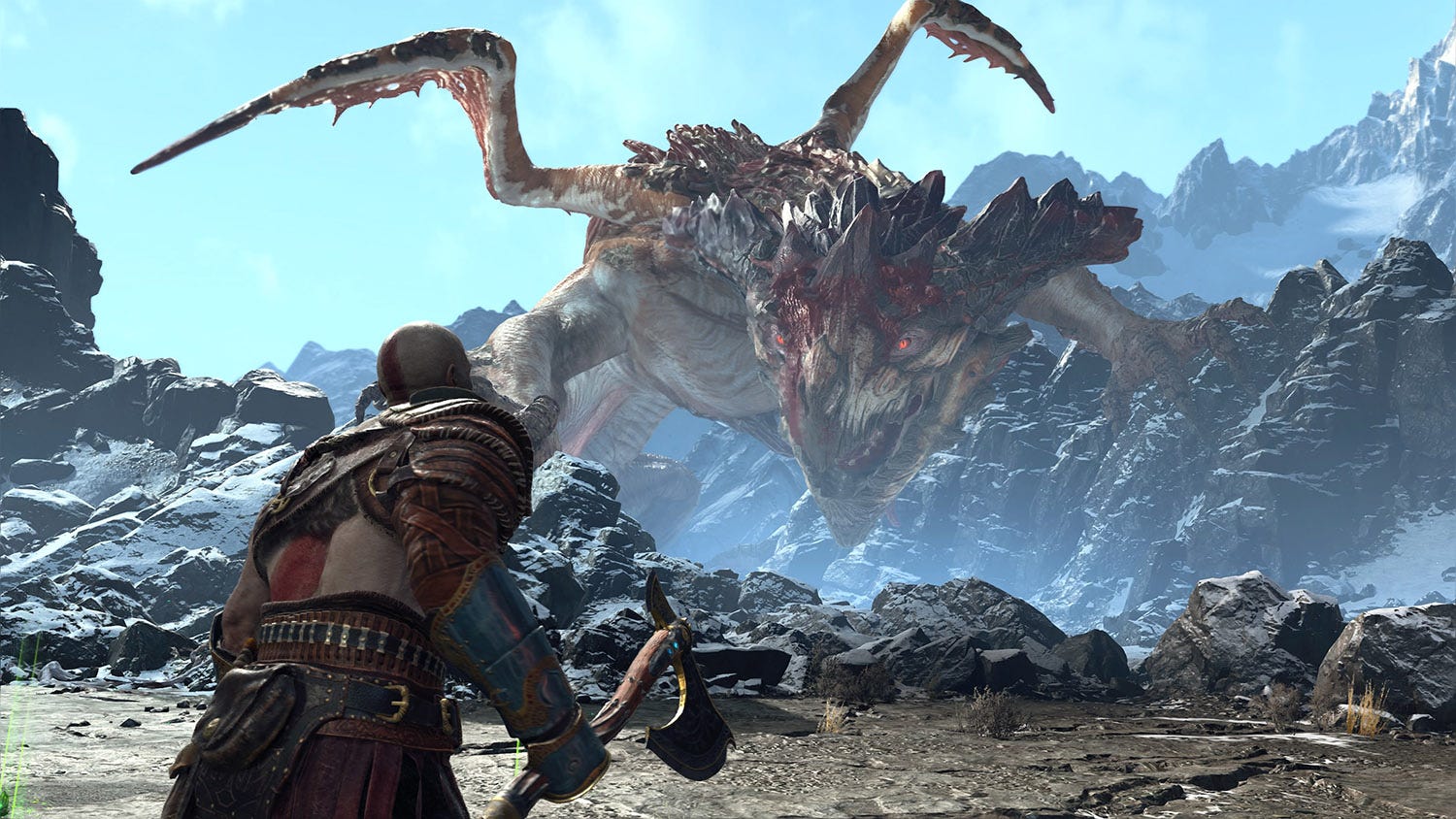
God of War for PS4; Image Credit: Business Insider
God of War (2018)
In the original God of War trilogy, Kratos was a Spartan warrior who pretty much genocided the Greek pantheon, including his father Zeus. Now self-exiled in the Midgard of Norse mythology, he’s trying to raise his own son, Atreus, while keeping him ignorant of his heritage and its baggage. Father figures are a well-trod topic in modern video-gaming, but what’s fresh here is that Kratos isn’t just struggling to protect Atreus from a legitimately cruel world, but also the cyclical abuse of immortals like themselves and, frankly, the toxic masculinity that typified the older games. Their dynamic is incredibly rich, sometimes funny, occasionally painful, and wisely complemented by the combat system. You never feel like you are escorting a helpless character; Atreus is an asset – wielding a bow, summoning animals, and translating foreign texts.
The fluid action, rewarding exploration, and deep immersion (there are no “camera cuts” in the entire game!) make this an extremely cinematic and well-rounded gaming experience. The superb graphics bring life to a host of gods and monsters, not to mention the fabled realms they guard. Oft-overlooked is the puzzle design, which breaks up the forebrain-free axe-hurling without ruining the pacing or instilling frustration.
Though I’m full of praise for God of War, I do have one protest cry I must let loose: let the player fast-travel right off the bat!
Score: 10 / 10
–Brian
Yoku’s Island Express (2018)
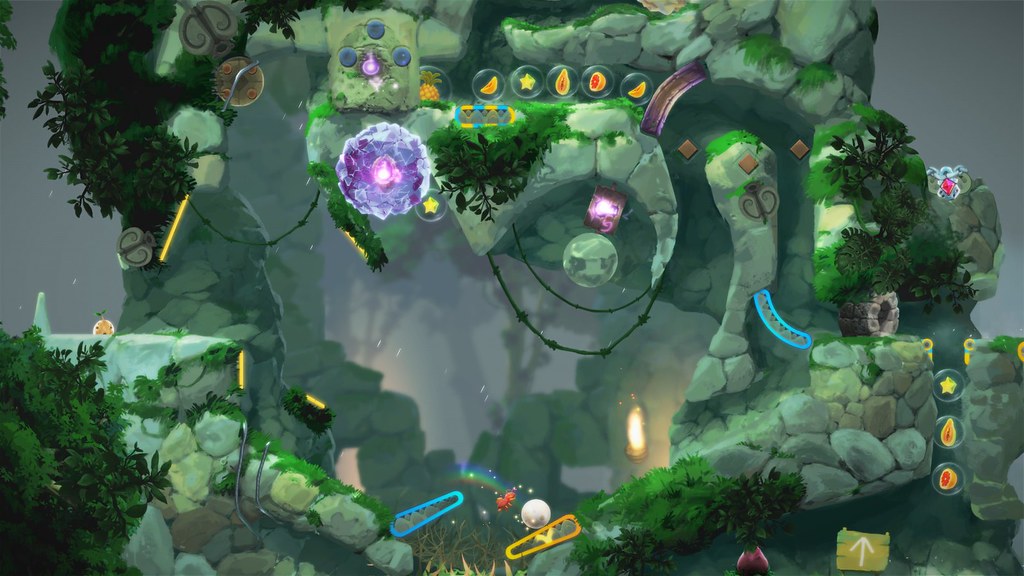
Have you ever harbored a secret desire to be a postmaster? Would you enjoy saving an island from inevitable doom? What are your thoughts on controlling a cartoon dung beetle? If all of these were positive, this “platforming pinball adventure” might be for you!
In the game, you control Yoku, the newly-arrived postmaster of an island. Attached to your dung beetle self is a ball. This ball is your primary source of movement as you get to know the island’s inhabitants, deliver letters, and stumble into a larger mystery. Yoku can move left and right, but cannot jump. That is where the pinball aspect of the game comes in. Anytime Yoku needs to move vertically, there are traditional pinball obstacles that need to be overcome. The player controls the flippers to fling Yoku to different objectives, to bust through walls, or to collect items. As the game progresses, these sections get increasingly difficult.
This game is charming, aesthetically adorable, and oddly different from anything else I have ever played. It’s extremely engaging – I played the entire game in one too-long sitting. The adventure-game-meets-pinball was a bit strange at times, but it worked in ways I never expected.
Score: 8 / 10
-Kelley
I love the originality of mashing up such disparate genres, especially since I’m an old school pinball fan, but I couldn’t get into this one. Maybe I’ll give it another go later this year.
–Brian
Professor Layton and the Unwound Future (2008)
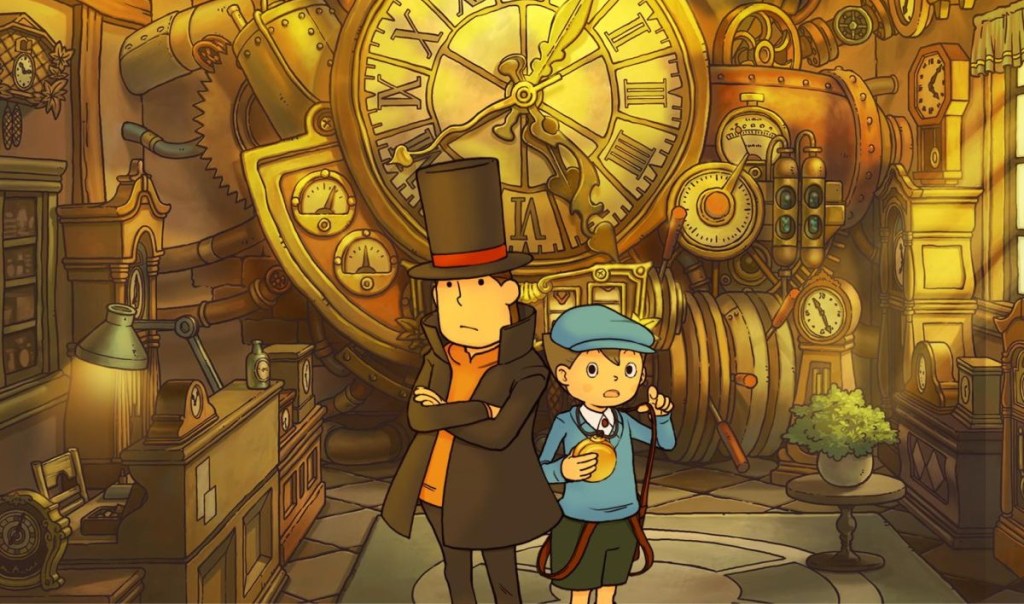
Here is the formula for a Professor Layton game: Top hat-doffing gentleman-detective Layton and his plucky apprentice Luke travel somewhere exotic, but comfy, to investigate seemingly supernatural circumstances, solving very-loosely related riddles, math problems, and logic puzzles along the way. Imagine a book of brainteasers adapted into an anime Scooby Doo starring an off-brand Sherlock Holmes. Part of the charm comes from every character responding to every situation by offering another puzzle:
Layton: “Have you seen a man with a bloody ax?”
NPC: “Speaking of axes, that reminds me of a riddle: three lumberjacks must divide a forest so that each plot had an equal number of trees.”
or
Layton: “We have five minutes to defuse this bomb!”
NPC: “Have you heard this one: over the course of five minutes how many degrees do the minute hand and hour hand rotate when combined?”
You get the picture.
Kelley and I became Layton fans working together on the first two entries. We still occasionally quote the lovably earnest leads. (“A true gentleman leaves no puzzle unsolved!”) Maybe we were just burnt out by the time we got to Unwound Future. There are a few too many trick questions and repetitions. The plot seems especially impractical. It also tries too hard to be bigger, resulting in dull stretches and backtracking. Also under-exploited is the central time-travel conceit, a missed opportunity for time-travel puzzles and paradoxes. If you are in the market for a collection of digital brainteasers, stick to the original: Professor Layton and the Curious Village.
Score: 5 / 10
–Brian
The Professor Layton series was a pleasant jaunt through a quirky, fantastical, quasi-Industrial Revolution Britain. The story was not the strong point of the game – man sees girl, girl looks familiar, time travel ensues – but it also feels like it wasn’t meant to be. The story was a convenient way to meet characters who turn almost every conversation into a way to introduce a puzzle. Half the joy was trying to figure out which random snippet of dialog would become the centerpiece of your next diversion. (The other half, naturally, was solving said puzzles.) Were the themes absurd? Yes. Was that okay? Yes. Did the main character have the best quotations about hats and how to be gentlemanly by solving puzzles? How is that even a question!
Though I found the series delightful, I lost steam during this third installment. As Brian mentions, the sheer number of trick puzzles were unappealing. Many of the others, though technically different, felt too close to those we solved in the previous games. Also, the amount of backtracking we had to do on filler screens was extremely time-consuming and disappointing. Overall, Layton and his hat will remain a fond gaming memory for me. Luke? – not so much.
Score: 4 / 10
–Kelley
For more in this series see 2019 Trios.
 Significant Gamers