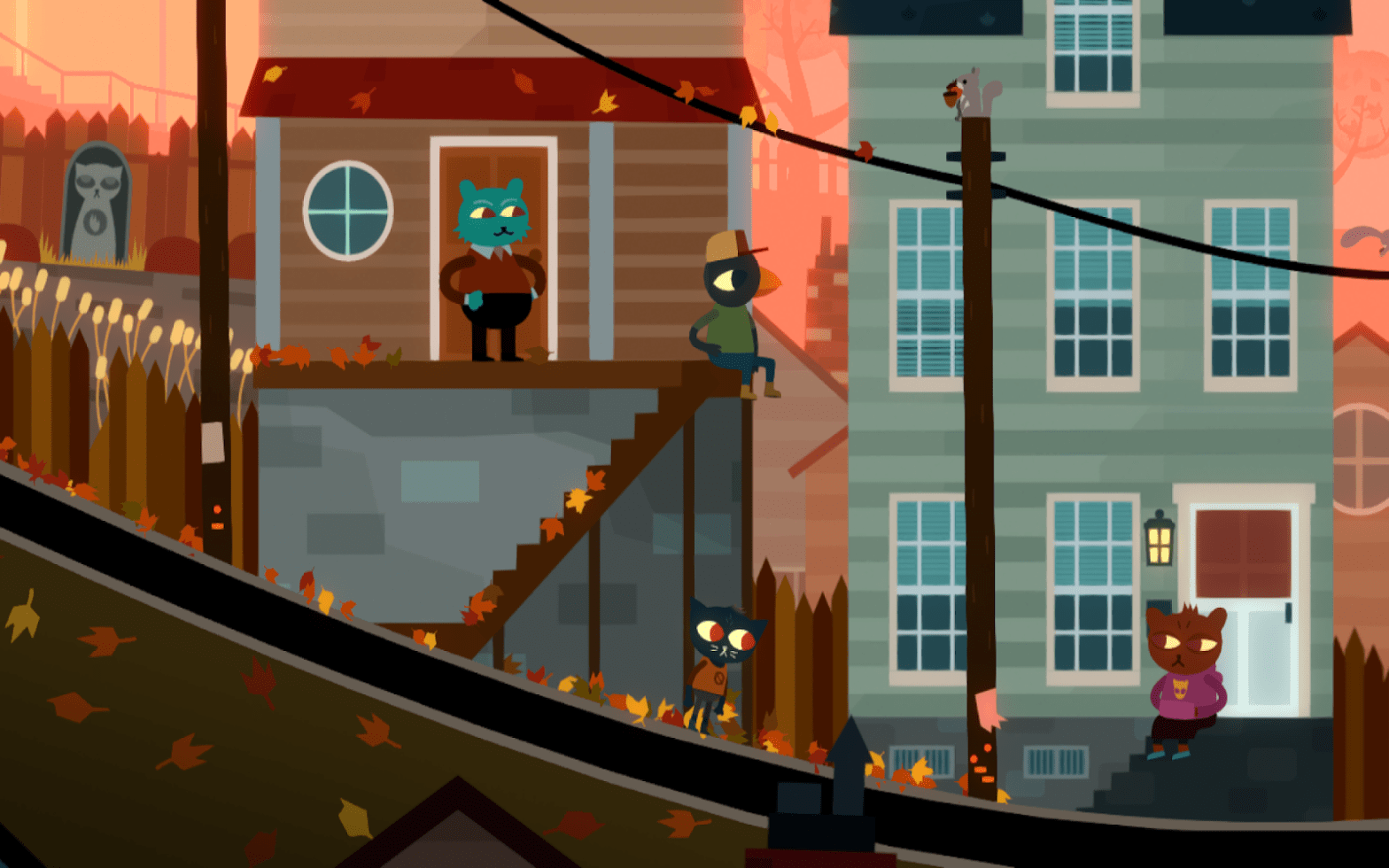
Night in the Woods for PC; Image Credit: Wrong Questions
Some shorter reviews today, but you get a bonus game!
Night in the Woods (2017)
Sometimes life gets the best of you, plans fall apart, dreams fade, you hurt someone, or get hurt, and lacking any better opportunity, you return to your childhood home to rest up and cobble your shit back together. But going home is rarely a solution to problems. At best it’s a holding pattern, at worst it’s more problems. Well-meaning parents who don’t understand you. Old-friends you’ve drifted apart from. People you called friends because circumstances put you into constant proximity during your formative years. This is the milieu of Night in the Woods; the story of Mae Borowski and her low-key buds in the dying rust-belt town of Possum Springs. It’s a slow-burn, but a slyly wise sliver of zeitgeist, that drew me in with its memorable characters, chipped wit, and bittersweet tone. It’s a bit like playing a season of Daria starring an anthropomorphic cast.
What will inevitably limit the audience for Night in the Woods is its hipster-millennial malaise, that fits hand-in-paw with the almost-pushed-past-the-breaking-point lack of action. The game simulates the anxious, yet idle, middle-ground between life stages. Mae has dropped out of school, but isn’t ready to find a job. She bums around town, shoots the breeze with her quirky friends, aimlessly explores rooftops, listens to street poetry, copes with depression, and experiences creepy dreams.
Night in the Woods pulls off something rare: a work about boredom that isn’t boring. The low-rent adventures, intimate hijinks, emotional honesty, and some damn fine dialog are extremely engaging. And Mae eventually gets caught up in a local conspiracy, perhaps more to stave off boredom than pure altruism, or because even arty games need rising action and catharsis, but either way it provides a nice narrative crutch in the few spots where the pacing limps.
When I think about my time playing Night in the Woods, I’m filled with nostalgia for a misspent youth that wasn’t quite mine and a run-down home town that’s oddly familiar. I look forward to the day I’ll go back.
Score: 8.5 / 10
–Brian
Overcooked 2 (2018)
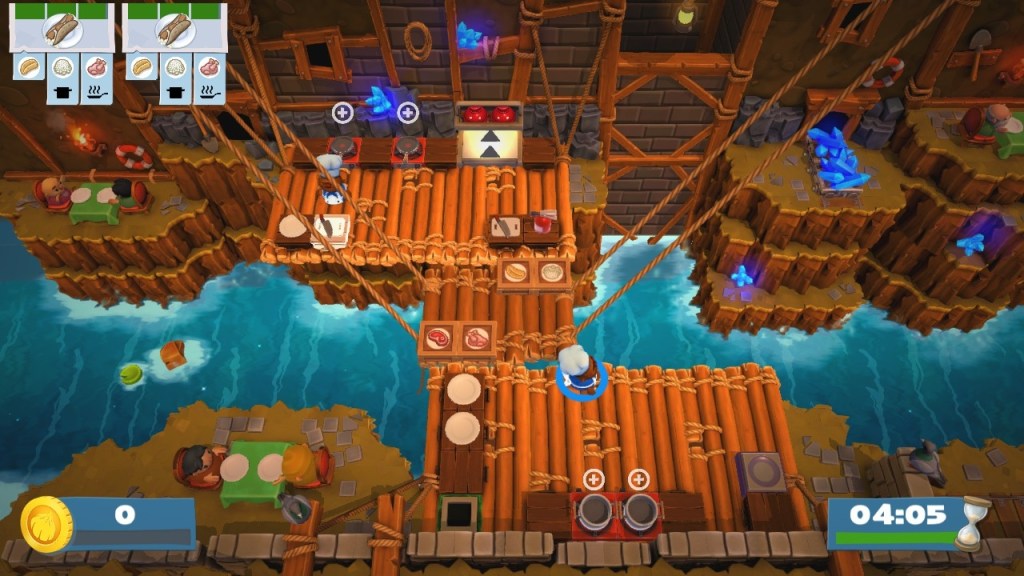
Diner Dash-type time management games are a tough sell for me. I’m no longer in food service, but that entire species of stress is borderline triggering. Yet when the original Overcooked turned chopping veggies, cooking soups, and serving impatient customers into a cooperative party game, I admit that good times were had. The series relies on cute cartoon animals (points for inclusivity; there are even chefs in wheelchairs) and absurd humor to leaven the unremitting pace, raging kitchen fires, inevitable verbal abuse from your fellow players, and the agonizing shame of a burnt hamburger.
Prepare yourself to cook hot meals in hot air balloons. Also graveyards, wizard’s towers, mineshafts, whitewater rafts, and worse. No actual cooking skills required, just a willingness to shout, “Where are the onions? I need diced onion, like, YESTERDAY!” at your friends or significant other. The sequel introduces new recipes (obligatory), teleporters (a bit perfunctory), the ability to throw items (a blessing), and conveyor belts (a curse). However the level layouts lean a little too far towards annoying in their attempt to offer fresh challenges, so I’d probably suggest sticking to the original unless you’re a diehard fan.
Score: 6.5 / 10
–Brian
Contrary to Brian, I enjoy time management games. There’s something about the way you need to be organized and think through your plan that really appeals to me. And in video games, the angry customer can’t hurt your feelings! (I used to work retail.)
I bought this game having never played the original Overcooked, but interested in the cooperative play style. Brian was only too kind to indulge me. We chopped, boiled, steamed, and served up plates of pasta, sushi, burgers, dumplings, and pizza to the waiting masses. We cooked, using only our wits and our increasingly raised voices, to puzzle through the orders coming in and the atmospheric challenges in front of us. My two main complaints from the game: 1) other than needing to return to the Onion Kingdom every world to touch base with His Majesty on the current “Unbread” situation, the story was almost non-existent and 2) the final level, which included snippets of almost every scenario and obstacle created in the game, was very difficult for two players.
Score: 7 / 10
–Kelley
Titanfall 2 (2016)
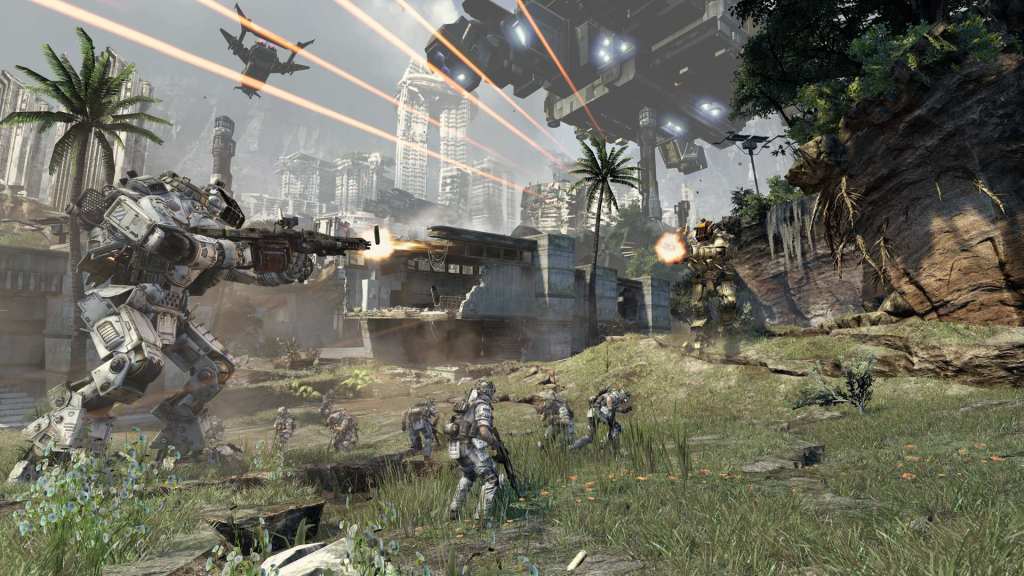
Sometimes giant robots need to punch each other. And to be fair, developer Respawn could have just muttered this timeless truism and phoned it in, cashing in on their previous multiplayer-only success. Instead they developed a single-player campaign (suddenly I’m interested!) and jammed it full of energy, action, and even inspiration, if not… intelligence.
The pacing is a nice balance of traditional FPS combat with delightfully empowering guns (my favorite, the Mastiff, burps horizontal bullet walls), scenic traversal featuring the best wall-running around, and chunky mech battles that are suitably slower, heavier, and louder. The writing is essentially sci-fi Call of Duty (all you need to know is that the protagonist’s name is ‘Jack Cooper,’ because of course), but the level design is where the game comes to life.
Each chapter has a distinct theme, providing not just a change to the visual palette, but affecting how you approach navigation and combat. The highlights are a vast city-building factory and an all-to-short segment where you can swap between post-apocalyptic present and technofascist past at the click of a button. Less exciting is the section where you operate a bunch of cranes.
Score: 8 / 10
–Brian
Out Run (1986)
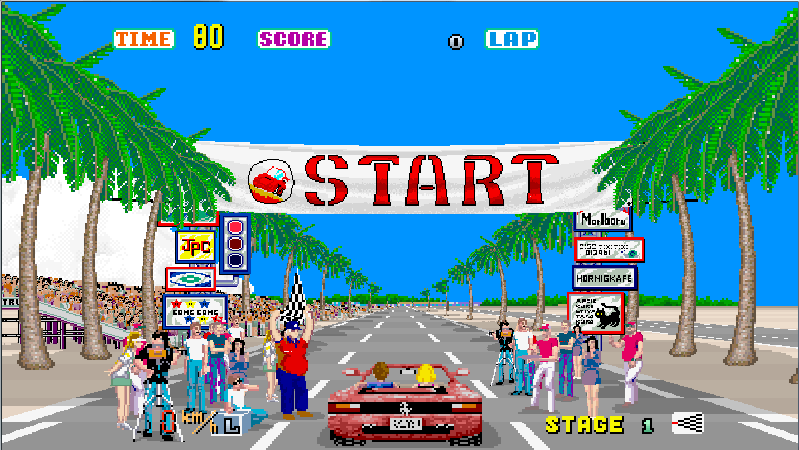
If Out Run is remembered at all today, it’s often due to its influence on the 2010s synthwave/vaporwave splinter that co-opted the name. However, back in 1986 Out Run was a hit arcade racer from Sega, designed by Shenmue creator Yu Suzuki. It’s no wonder that Out Run belatedly spawned a music subgenre: it was the first game to let you adjust the radio, selecting from several memorable surf-rock beats. The graphics don’t quite have the longevity of the soundtrack, but the Europe-inspired scenery is colorful and distinctive enough.
I played several other vintage racing games recently and most are not even worth mentioning, but Out Run holds up because of its rather simple – though modern – ethos: driving should be fun. The roads are wide (5 lanes for many stretches) and gracefully sinuous (no whiplash hairpins, obstacles, or gimmicks). Instead of aggressive rival racers you pass by law-abiding traffic. Instead of draining your store of quarters with grueling, punishing difficulty, you’re given a generous 16 chill-but-challenging, forgiving-but-fair branching routes that encourage replays. I’m of the opinion that few games from the 1980s are still playable today outside of nostalgia, but Out Run is a surprising exception and a retro treat.
Score: 5 / 10
–Brian
For more in this series see 2019 Trios.
 Significant Gamers