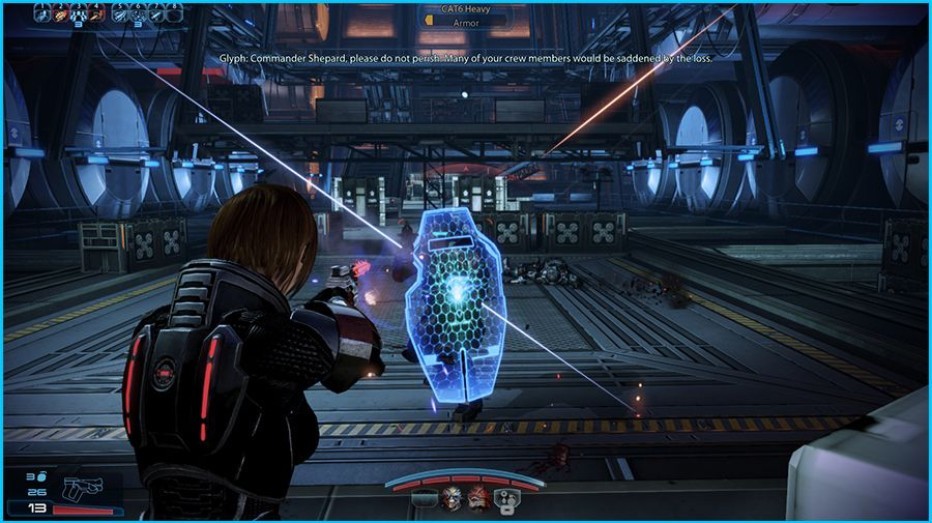
Mass Effect 2 for PC; Image Credit: hddmag.com
Mass Effect 2 (2010)
The Mass Effect universe has so much lore that it helps to spend some time reading the in-game encyclopedia. Yup, this is the type of game with an in-game encyclopedia! To boil it down: a couple hundred years in the future humanity is one of several races in an alien UN called the Citadel Council, under threat from a machine race. In the first game Commander Shephard delayed an invasion initiated by an AI hive mind, the Geth. A few years have passed and you died, but a privately-funded, ethically-dubious “human supremacist” organization called Cerebus resurrects you to investigate a string of outer colonies going incommunicado.
Mass Effect plays as a third-person cover shooter with a 3-person squad. You control Commander Shepard (who’s gender, appearance, and class are yours to decide) and select any two of your AI-managed crew members to accompany you on missions. As they gain experience you can improve their weapon proficiencies, special abilities, and even psychic powers. Beyond regular health, enemies have several potential defenses (armor, shields, and barriers), encouraging you to cycle through ammunition types in a rock-paper-scissors manner.
The bulk of the story is travelling the galaxy to assemble your crew, many of whom are former friends from the original Mass Effect who moved on after your death. Each has a required mission for recruitment and an optional one that develops backstory and solidifies loyalty. The diverse personalities and alien cultures, strong writing, top-notch voice acting (Martin Sheen, Yvonne Strahovski, Seth Green, Tricia Helfer, and the ubiquitous Jennifer Hale, among others) make Mass Effect’s characters among the best in gaming.
Developer Bioware improved on their previous games. Over the original Mass Effect: exploration is streamlined, combat is more intense, worlds are more artisanal. Over KOTOR: less pausing during combat, simplified inventory, better squad AI, deemphasized stats, greyer morality. The paragon/renegade system feels like a reskin of the Star Wars light-side/dark-side dynamic, but at least in ME2 these aren’t treated as mutually exclusive. There are many positive legacies too: character-driven world-building, epic scope, and player choice.
Do I have any complaints about Mass Effect 2? Very few. Scanning planets for resources is tedious. And while the game offers gender and romantic partner variants (including asexual and lesbian options), they backed out a planned gay male path, a cowardly decision even in 2010.
Score: 9 / 10
–Brian
Tacoma (2017)
Tacoma developer Fullbright is best known for their 2013 surprise hit: Gone Home. This earlier title is the story of a young woman who finds her family strangely absent from home after returning from a gap year in the mid-1990s and must piece together what transpired. The game’s nonlinear approach, minimal interactivity, and LGBT themes helped expand the possibilities of game-based storytelling and widened the target audience for indie games. The question on everyone’s mind pending the release of Tacoma, was whether Fullbright could work the same magic again.
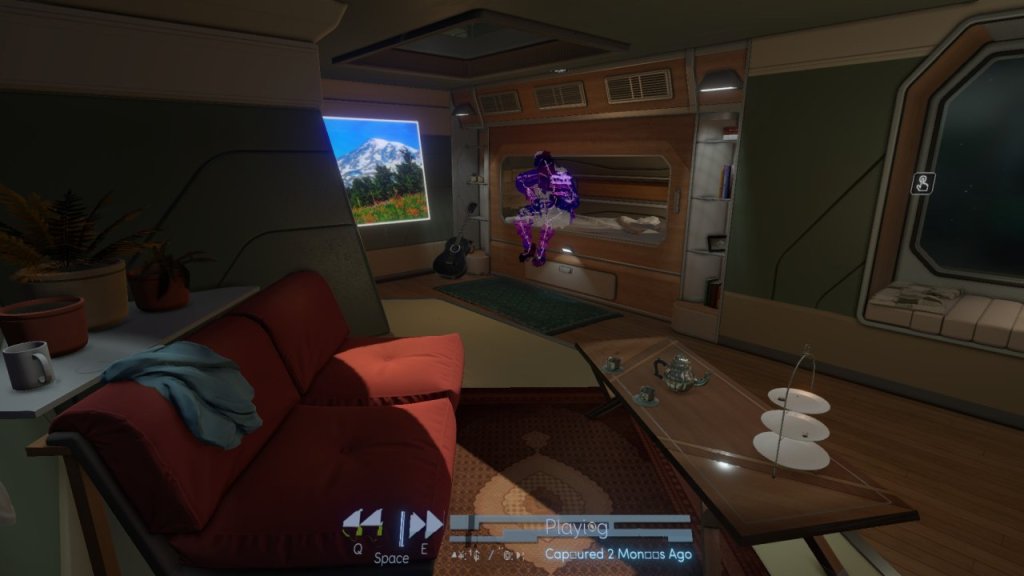
The answer is: not quite. To their credit, Fullbright didn’t just repeat Gone Home. They chose a radically different setting (a distant space station), a larger cast (the crew and ship AI), and a broader scope (a disaster aftermath investigation involving not just personal relationships, but corporate conspiracies). In many ways the core gameplay is similar: an observational mystery in an abandoned enclosed environment. The coolest addition is a new tool: the ability to playback camera-recorded snippets of the previous few days in virtual reality. This allows you to watch slices of what happened while moving about, following holograms of each crew member and even accessing their communications.
Tacoma’s length and pacing make for a short, leisurely jaunt that will likely still appeal to Gone Home fans, without quite scratching the same itch. The framing mystery is too predictable. There’s a nice subversion of some classical AI tropes, but otherwise the story is not very memorable. And though I appreciate the inclusivity of the ensemble, the characters rarely came through as nuanced, living, breathing people. My favorite moments are still untangling the minutiae of their flirtations and frictions, personal lives and career ambitions, but the protagonist’s lack of a personal stake created a certain emotional distance.
I played Tacoma with Kelley and our larger “Gnifty” gaming group. The spaceship is divided into linear bite-sized sections (Administration, Medical, Engineering) that lend themselves to trading off the controller. The emphasis on story and the consistent pacing generally worked for a group experience, but there was less excitement and tension compared to similar events that we’ve hosted.
Bonus points for the cat’s hologram being semi-hidden in many scenes.
Score: 5.5 / 10
–Brian
Tacoma is more like experiencing a story than playing a game. You control Amy, an investigator sent by mega-conglomerate Ventrius to determine what happened to the crew of the Tacoma station. Throughout the course of the game, the fact that you are technically playing a character is secondary. Your role is to fast forward and rewind time to see pivotal conversations between crewmembers or personal moments in their lives. You encounter these moments out of chronological order. As you continue playing, you start to piece together the overall timeline and sequence of events in a way that really ties the story together.
Here’s my big problem with Tacoma – if I’m an investigator who has been sent to figure out what happened on a space station, wouldn’t you think that the company would send me in with a map? Why am I just bumbling around in an environment with limited oxygen without knowing where and what all of the rooms are? It seems like a poor use of resources.
Score: 7 / 10
–Kelley
The Longest Five Minutes (2018)
The tone of an RPG varies drastically based on whether the game is 1) taking itself seriously or 2) making fun of/paying homage to other RPGs. The Longest Five Minutes falls into the latter category.
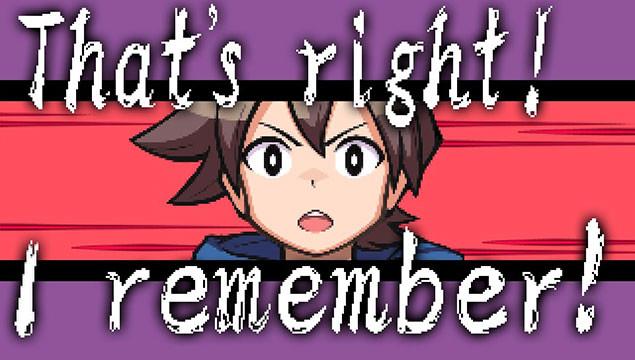
In the game, you play a hero called… wait for it… Flash Back, who is locked in a final boss battle with an evil Demon King. Something has happened and you have lost all of your memories. You can’t remember your hometown, your special super-awesome fighting moves, or even the names of your party members! The entire game is set in the final five minutes of this battle, with you slowly gaining more knowledge about who you are and why you are in a fight for your life. You gain this understanding through, you guessed it, flashing back to key moments where you learned something important about yourself or others.
The Longest Five Minutes does an excellent job giving a wink-and-a-nod to the RPGs that came before it, while trying to take a different angle. Unfortunately, the humor didn’t really work for me and I thought the game play was quickly repetitive. Though some of the jokes were amusing, I didn’t find the kernel of well-rounded uniqueness I was looking for in this game with such an intriguing premise.
Score: 4 / 10
–Kelley
For more in this series see 2019 Trios.
 Significant Gamers